

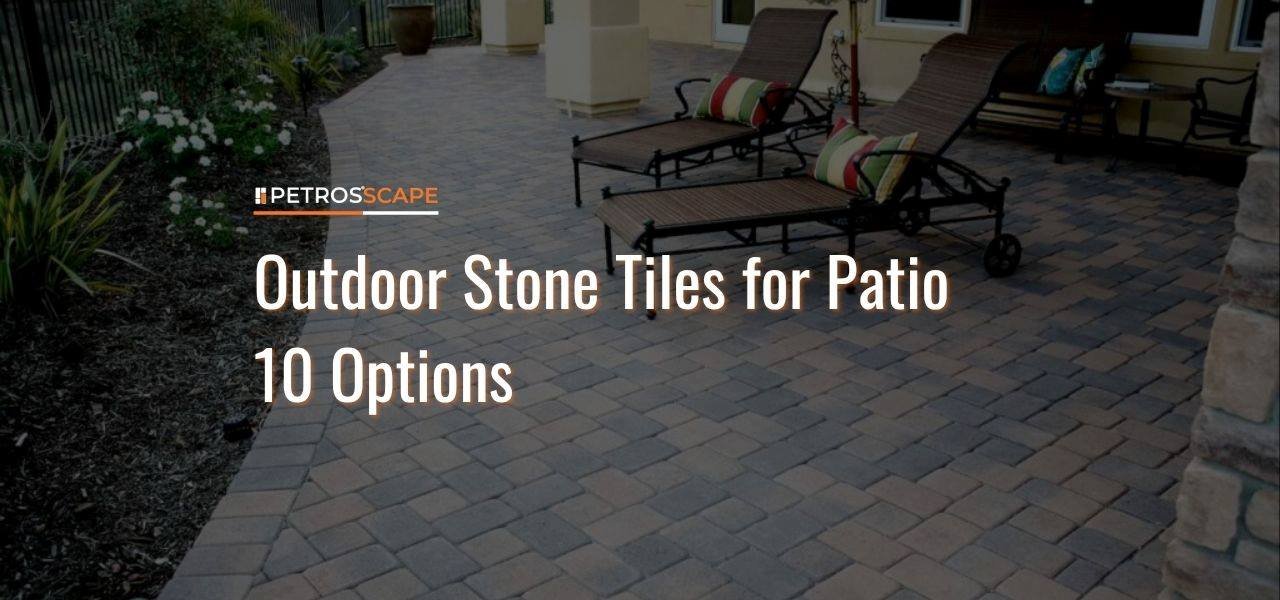
Outdoor Stone Tiles for Patio | 10 Options
The right flooring can significantly enhance the overall aesthetics of an outdoor space. While interior flooring is protected from environmental stress, outdoor spaces like patios remain exposed to extreme moisture, sunlight, and temperature variations. Which is why outdoor stone tiles are one of the best picks for patio flooring.

List of 10 Best Outdoor Stone Tiles with Indicative Prices
| Stone Tile | Image | Price Range (USD / Sq. Ft.) | Appearance | Technical Description |
| 1. Sandstone |  | $0.9 – $2.5 | Warm earthy tones (beige, red, brown) with grainy texture | Sedimentary stone with density ~2.2–2.6 g/cm³. Water absorption 2–6% → needs sealing. Compressive strength ~20–170 MPa. |
| 2. Travertine |  | $1.8 – $5 | Soft beige, ivory, rustic porous look | Calcium-based stone with visible pores. Absorption 3–5%+ → high maintenance outdoors. Strength ~30–110 MPa. |
| 3. Granite |  | $1.2 – $5.1 | Speckled crystalline pattern, wide color range | Dense igneous stone (2.63–2.75 g/cm³). Water absorption ~0.2–0.4%. Compressive strength 130–250 MPa. ASTM C97 & C170 compliant. |
| 4. Basalt |  | $1.5 – $4 | Dark grey to black, uniform fine-grain | Extremely dense volcanic stone (~2.85–3.1 g/cm³). Absorption <0.5%, strength up to 200–350 MPa. |
| 5. Slate |  | $1.3 – $3.5 | Layered, textured, natural cleft finish | Metamorphic stone with natural anti-slip texture. Absorption <1%. Moderate strength (~100–180 MPa). |
| 6. Limestone |  | $1.5 – $4.5 | Soft, uniform pastel tones (cream, yellow) | Density ~2.3–2.7 g/cm³. Absorption 3–7%. Strength 30–200 MPa. |
| 7. Quartzite |  | $3 – $9 | Sparkling crystalline surface, marble-like veins | Very hard metamorphic stone. Absorption <1–3%. Strength often >150 MPa. |
| 8. Marble |  | $1.8 – $6 | Smooth, veined, luxurious finish | Density ~2.6–2.8 g/cm³. Low absorption (<1%) but chemically reactive. Strength ~70–140 MPa. |
| 9. Porcelain |  | $2 – $5 | Uniform, printed stone patterns | Engineered tile (not natural stone). Water absorption <0.05%. Highly durable, ASTM compliant. |
| 10. Cobblestone |  | $1.5 – $5 | Rough, rustic, irregular blocks | Usually granite/basalt based. Very high compressive strength (>200 MPa). |
In this article, we explore the key factors to consider when choosing outdoor stone tiles, including material types, finishes, and performance. We also examine how climate, usage, and design impact durability and aesthetics. Finally, we provide practical guidance to help you select tiles that are both long-lasting and visually appealing
Why Opt for Stone Tiles in a Patio?
- Natural stone texture imparts timeless aesthetics to the patio.
- The small tiles fit seamlessly into the design of smaller patios. These are more efficient than the large stone slabs.
- Being natural stones, most of these tiles have inherent slip and scratch resistance. It ensures the safety of the users.
- Stone tiles have to be maintained with a simple cleaning procedure. These are the low-maintenance options offering lasting value.
- As compared to the large and heavy natural stone slabs, tiles are easier to install.
- While the material cost of both natural stone slabs and tiles is comparable, the installation cost varies. The installation of tiles is more economical.
Top 10 Best Outdoor Stone Tiles Options for Patio
1. Sandstone
Sandstone is formed through the compression of sand over time. It is known for its earthy tones and subtle patterns. A few of the most popular varieties of sandstone are Dholpur Beige, Agra Red, Gwalior Mint, Rainbow Sandstone, etc.


Key Features
- A layered and naturally cleft surface.
- Warm and earthy color palette.
- Slip resistance (when properly finished).
- Moderate porosity.
Best-Use Case of Sandstone


- Patios with rustic or traditional design language.
- Patio flooring in hot and dry climates.
- Sealed sandstone can be used for outdoor steps and paving.
- Yellow-toned varieties of sandstone can be used outdoors, but with appropriate sealing. An unsealed sandstone may lead to discoloration due to UV light.
- For coastal areas or zones with high humidity, avoid using highly calcerous sandstones. Without sealants, these may encourage biological growth.
Pro-Tip: Clean the stone tiles with pH-neutral cleaners every week. Also, don’t miss out on the periodic sealing for the longevity of the material.
Pros & Cons
| Pros | Cons |
| Timeless aesthetics with its earthy texture. | A limited color palette. |
| Well-suited for heavy traffic spaces. | Has to be sealed due to its porous nature. |
| Offers flexibility in surface finishing with options in polished, honed, and natural finishes. | Dents and scratches easily show up on its surface. |
| The cold underfoot makes it ideal for outdoor spaces in hot climate zones. | Has to be regularly sealed to retain its strength and look. |
| An affordable choice for outdoor flooring. | Premium varieties may be expensive. |
Overall Rating
Aesthetics– 8/10
Durability– 7/10
Cost– 8/10
Ease of Installation– 8/10
2. Travertine
Travertine is one of the most elegant natural stones formed from limestone deposits. Its beige, ivory, and cream tones mimic the look of marble. The movement in its veining pattern makes it versatile for application in both modern and classic designs.
Key Features
- Warm-toned base with a veining pattern of horizontal bands and cloud-like swirls.
- Ideal only for low to medium traffic zones.
- Highly porous stone.
- Has slightly pitted surface, which may lead to dust accumulation until sealed.
Pros & Cons
| Pros | Cons |
| The soft earth tones help impart sophistication to the patio design. | Has to be periodically sealed. |
| Can be applied in different finishes like brushed, tumbled, honed, or polished. | Has to be maintained as the material is prone to stains |
| Has a cool underfoot, making it an ideal pick for outdoor spaces in hot climate zones. | The cold underfoot may be uncomfortable in cold climates. |
| Available in different tile sizes and thicknesses– 16mm, 18mm, and 20mm | Prone to chipping and scratching under high impact. |
Best-Use Case of Travertine


- Mediterranean patio designs, especially in hot climate zones.
- Outdoor spaces with moderate use.
- Due to its excellent slip resistance, sealed travertine tiles can be used for poolside decks, too.
Pro-Tip: Rather than installing stone slabs, consider adding travertine tiles. Since travertine is prone to cracks and scratches, the tiles are comparatively easier to replace.
Overall Rating
Aesthetics– 8/10
Durability– 7/10
Cost– 7/10
Ease of Installation– 7/10
3. Granite
Granite is one of the hardest natural stones. It is the most popular pick for both residential and commercial outdoor floorings due to its high durability, wide variety of tones, textures, and patterns.
Key Features
- Resistant to weathering, heat, stains, and scratches.
- Available in 100+ different types.
- Easy maintenance.
- Low porosity makes it ideal for moisture-prone areas.
Pros & Cons
| Pros | Cons |
| Complements every design language. | A few varieties of granite may require periodic sealing. |
| Naturally stain, heat, and scratch resistant. | High upfront cost. |
| Exceptionally durable. | Has to be installed by skilled professionals. |
| Demands low maintenance. | The hardness and weight of granite tiles make it slightly difficult to install. |
| Can be used in several finishes like honed, leathered, bush-hammered, etc. | An uneven sub-base may develop cracks in the tile. |
Best-Use Case of Granite


- Patios with a premium budget.
- High traffic patios or commercial plazas.
- Can be used for patios in extreme winter, summer, or rainfall-prone regions.
Pro-Tip: For hot climates, consider using light-colored granites to reflect more heat. For cold climates, high-density granites help resist cracking. And while selecting granite in wet climates, ensure to opt for textured finishes over polished ones for slip resistance.
Overall Rating
Aesthetics– 8/10
Durability– 10/10
Cost– 6/10
Ease of Installation– 6/10
4. Basalt
If you’re looking for a stone tile for patios experiencing high traffic, basalt is one of the best choices. It is a volcanic stone known for its dark, neutral tone. Its hardness is comparable to granite.
Key Features
- Dark-colored stone.
- Durable to resist weathering even in harsh conditions.
- Can be integrated into diverse design languages.
- Demands minimal upkeep.
Pros & Cons
| Pros | Cons |
| Highly durable. | May absorb moisture and oil, leading to staining due to porosity. |
| The textured surface offers excellent slip resistance. | Offers a limited color palette ranging from grey to black. |
| Imparts a modern look to the outdoor spaces due to its dark tones. | Heavier to install, which may significantly increase the price. |
| Budget-friendly. | Polished basalt may be slippery. |
Best-Use Case of Basalt

- Modern patio flooring with heavy foot traffic.
- The small sizes are ideal for application in patios.
- Textured finishes are best for slip-resistant surfaces.
Pro-Tip: For best performance, hire professionals for the installation. Make sure to periodically seal the flooring to prevent staining.
Overall Rating
Aesthetics– 8/10
Durability– 9/10
Cost– 6/10
Ease of Installation– 6/10
5. Slate
Slate is another durable material for patio flooring. This metamorphic rock comprises mica, quartz, and several other naturally occurring minerals in the Earth’s crust. The layered surface and a broad spectrum of hues make it one of the most loved picks for patio paving.
Key Features
- The visual appearance features a layered surface and varying hues due to its natural formation.
- One of the hard and durable stones for the longevity of outdoor spaces.
- Available in different colors, primarily categorized based on their origin.
- A cost-effective choice for both modern and traditional designs.
Pros & Cons
| Pros | Cons |
| One of the hardest and most durable outdoor stone tiles. | May develop cracks under high impact and in heavy frost regions. |
| Natural cleft surface offers slip resistance. | The natural texture may lead to an uneven underfoot. |
| Low porosity makes it ideal for rain-prone patios. | Low-quality slate is less durable. |
| Rich color variation imparts unique aesthetics. | A few varieties have to be sealed regularly to prevent absorption, staining, and flaking. |
Best-Use Case of Slate


- Consider adding slate tiles for outdoor patios with a stable base.
- For patio designs demanding organic and warm aesthetics.
- Slate stepping stones may be installed directly on soil or gravel for a defined path.
Pro-Tip: Make sure to consult a stone expert and pick high-quality slate for longevity.
Overall Rating
Aesthetics– 8/10
Durability– 8/10
Cost– 7/10
Ease of Installation– 7/10
6. Limestone
Limestone is another natural material known for its timeless aesthetics and versatility in application. This sedimentary rock exhibits a colorful composition with varying textures.


Key Features
- There are different types of limestones categorized based on their composition– sedimentary, travertine, chalk, dolomitic, and crystalline limestones.
- The neutral hues of limestone blend in diverse design languages.
- Being a soft stone, it is easier to cut and install.
- It is naturally resistant to extreme temperatures.
Pros & Cons
| Pros | Cons |
| An elegant appearance. | Prone to scratches. |
| Weather-resistant. | It has to be sealed for non-porosity. |
| The surface can be finished in multiple finishes like honed, natural, leathered, mirror polished, ziano, etc. | The surface may get damaged due to harsh and acidic cleaners or chemicals. |
| Required minimal upkeep with simple wiping and cleaning. | The appearance may look aged over time due to patina formation. |
Best-Use Case of Limestone

- Install a brushed or tumbled finish for slip resistance.
- Suitable for moderate-use patios due to softness.
- Preferred for dry climates.
Pro-Tip: To attain an informal patio look, consider laying the tiles on a flattened gravel base. This approach enhances durability in cold climates as moisture seeps into the ground through the gravel bed.
Overall Rating
Aesthetics– 7/10
Durability– 6/10
Cost– 6/10
Ease of Installation– 7/10
7. Quartzite
Quartzite tiles are one of the classy options for outdoor patios.
It exhibits elegant patterns with colors ranging from soft white to vibrant pink, green, and gold. A few of the popular quartzites are Alaska White, Patagonia Gold, Alaska Gold, Calcutta, Taj Mahal Quartzite, etc.
Key Features
- The veining pattern imparts unique aesthetics to every slab.
- Extremely durable with resistance to wear, scratches, and heat.
- Doesn’t need specailized cleaning regime.
Pros & Cons
| Pros | Cons |
| An array of shades. | Has to be sealed every 12-24 months to prevent staining and moisture absorption. |
| Suitable for heavy traffic areas. | Expensive. |
| Exhibit resistance to heat and UV radiation. | Need professional installation. |
| The sturdy nature ensures longevity. |
Best-Use Case of Quartzite


- It is a perfect choice for luxury patios with high traffic.
- The varying patterns and tones offer versatility to complement coastal, rustic, modern, and classic designs.
- Can be used for patio flooring in hot climates as the material is heat and UV-resistant.
- Quartzite tiles can be installed in patios of colder climates as well, but have to be paired with outdoor rugs as the material has naturally cold underfoot.
Pro-Tip: To differentiate between real quartzite tiles and quartzite-looking tiles, conduct a knife scratch test. The real stone tile will never scratch easily due to its hardness.
Overall Rating
Aesthetics– 10/10
Durability– 9/10
Cost– 4/10
Ease of Installation– 6/10
8. Marble

Marble is one of the most luxurious stones. Intense pressure and heat on limestone lead to the formation of this metamorphic rock.
When it comes to marble tiles, there are plenty of options to choose from– each with varying tone and veining pattern. A few of the most popular marble are Carrara, Statuario, Calacatta, Makrana, Black, Green marble, etc.
Key Features
- Unique veining pattern.
- A sense of luxury.
- Marble is a soft material and is porous if not sealed properly.
- Fire-resistant properties.
- Cold underfoot due to its heat resistance.
Pros & Cons
| Pros | Cons |
| Adds to the sense of sophistication and luxury in patio designs. | Porous nature leads to staining. |
| Can be extremely durable if taken care of. | Being a soft material, heavy impact may result in etching or scratching. |
| Heat and fire-resistant. | Costs more than several other stone tiles. |
| The sturdy nature of the material ensures longevity. | Has to be maintained regularly. |
Best-Use Case of Marble

- Ideal for patio designs aiming at elegant and luxurious aesthetics.
- For homeowners who can commit to regular maintenance of the tiles.
- One of the best choices for patios in hot climates is marble, which stays cool.
- Patios with moderate use.
Pro-Tip: When selecting the color of the marble, always prefer darker varieties for outdoors, as they can effortlessly conceal stains or imperfections.
Overall Rating
Aesthetics– 10/10
Durability– 6/10
Cost– 5/10
Ease of Installation– 7/10
9. Porcelain
Porcelain tiles are engineered by blending natural minerals like quartz, feldspar, and kaolin clay. It is highly valued for its non-porous nature, durability, and aesthetic appeal. These tiles often mimic the aesthetics of natural stone, but at an economic price.
Key Features
- Excellent in terms of durability and enhances the longevity of the space.
- Can be manufactured in a wide range of colors, finishes, and patterns to complement diverse design languages.
- Resistant to weathering, and can withstand UV rays to keep the color and appeal intact.
- Being a non-porous material, it resists stains and demands minimal upkeep.
Pros & Cons
| Pros | Cons |
| Heat, scratch, stains, and UV-resistant. | High gloss surfaces may lead to slipperiness if wet. |
| Available in a plethora of colors and patterns. | More expensive than ceramic tiles. |
| Easy to maintain due to its non-porous nature. | May crack when the temperature drops. |
| Gives the look of natural stone at a comparatively lower price. |
Best-Use Case of Porcelain


- Its hard and scratch-resistant surfaces make it a popular choice for both residential and commercial outdoor applications.
- Can be used in patio flooring for households that can’t spend much time on maintenance.
Pro-Tip: Make sure to consult a stone expert to understand whether the tile can withstand freezing winter and rainfall if you’re planning to install porcelain tiles for patios in such a locality.
Can Porcelain Tile Break?
While porcelain tiles are celebrated for their durability, they may not perform well in extreme outdoor conditions when compared to natural stone.
The thin porcelain tiles tend to crack when a concentrated load is applied over a small area. Its ability to withstand stress or crack also depends upon the quality of the tile.
With plenty of suppliers offering porcelain tiles at low costs, ensure to always source them from a reliable source promising quality and resilience for outdoor applications.
Another factor that may lead to cracking of porcelain tiles is improper installation. Voids in grouting or an unlevelled base may allow moisture to seep in, eventually leading to cracking.
This is especially common in extreme winter where the trapped water freezes and then expands. It leads to the development of pressure that chips, cracks, or detaches the tile.
Overall Rating
Aesthetics– 8/10
Durability– 7/10
Cost– 8/10
Ease of Installation– 8/10
10. Cobblestone

Cobblestones are known for their small sizes, typically 100 X 100mm and 150 X 150mm, with thickness ranging between 25mm and 100mm. These are known for their unique aesthetics due to their textured surface.


Key Features
- Extremely durable.
- Can withstand heavy loads.
- Slip-resistant.
- Offers flexibility to develop unique design patterns for flooring.
- Being small-format flooring, damaged cobbles can easily be replaced.
Pros & Cons
| Pros | Cons |
| Imparts classic and natural charm to the patio with its varying tones and texture. | Rounded cobbles may be uncomfortable due to their uneven surface. |
| Can withstand heavy foot traffic and vehicular load. | Labor-intensive and time-consuming installation. |
| Resistant to extreme weather conditions. | The weed growth in between gaps has to be maintained promptly. |
| Allows water to soak through and minimizes surface runoff. |
Best-Use Case of Cobblestone


- Their durability makes them the best choice for residential and public driveways to withstand even heavy vehicle loads.
- Patios aiming at old-world charm through organic texture and slightly irregular edging
- Patios with a classical European design theme.
Pro-Tip: Consider opting for granite cobblestone over limestone for added durability.
Overall Rating
Aesthetics– 6/10
Durability– 9/10
Cost– 7/10
Ease of Installation– 5/10
What Should be the Right Thickness for Outdoor Stone Tile?
The primary deciding factors for the thickness are:
- Overall foot or vehicular traffic. When it comes to spaces with foot traffic, even lighter thickness may work well. However, to withstand the load of vehicles, the tile has to be thicker to bear the impact and prevent cracking.
- The size of the tile also guides its thickness. For example, the smaller tile may work well with less thickness than a larger tile. The main reason is that the larger the tile spans, the more prone it becomes to bending stress and cracking.
- The type of stone also helps determine the thickness. For example, as granite and quartzite are hard stones, they may work well even with thinner tiles as compared to soft stones like sandstone or limestone.
Thickness of Stone Tiles for Foot Traffic
| Size of Stone Tile | Standard Thickness |
| 30 X 30 cm | 2.5 cm |
| 60 X 60 cm | 3-4 cm |
| 120 X 60 cm | 5-8 cm |
| Larger Formats | 7-10 cm |
Thickness of Stone Tiles for Vehicular Traffic
| Size of Stone Tile | Standard Thickness |
| 30 X 30 cm | 4 cm |
| 60 X 60 cm | 6 cm |
| 120 X 60 cm | 8 cm |
| Larger Formats | 10 cm |
Choosing the Right Surface Finish for Outdoor Stone Tiles
There’s no limit to the stone tile surface finishes, whether it’s a natural or engineered stone.
Here are a few surface finishes:

The most common finish in the majority of the stones is a glossy, mirror-like shine.

The surface of the tile is traditionally chiseled for a rugged surface.

The polished stone surface undergoes treatment to develop lava-like layers on it.

In this case, the granite surface is evened out, resulting in groove-like patterns.

It adds gloss to the leathered finish by levelling the granite surface and polishing it to subtly etch it.

A rustic finish where granite loses the original shade as the surface is heated with high-intensity flames.

An organic and anti-skid finish balancing both matte and glossy appearances.

The blend of polished and leather finishes

In this case, the granite slab is tumbled in a drum containing sand, pebbles, and water to create a rugged look.

Antique finish polishes the softer part of the granite.

In this case, the stone is unprocessed to retain its organic surface.

One of the most common granite finishes has a matte surface. It often lightens the tone of the granite.
When it comes to choosing one finish for outdoor patio tiles, make sure to opt for a textured surface. A textured surface facilitates traction. A few of the best options for tile finishes are ziano, honed, brushed, and polished.
Pro-Tips to Select the Right Stone Tile
- Before finalizing the material, understand the weather conditions to assess whether the patio tile can withstand the temperature.
| Climatic Condition | Recommended Stone Tile |
| Hot and Dry Climate | Marble, Granite, Sandstone, Travertine, Limestone |
| Wet | Granite, Quartzite, Porcelain |
| Cold Climate | Basalt, Cobblestone, Limestone with gravel base, High-quality slate |
- Set your budget beforehand to easily shortlist your options.
- Keep in mind the overall aesthetics of the house and landscaping to opt for the right tone and pattern.
- Evaluate the foot traffic to choose durable stone tiles and decide the appropriate thickness.
- As some materials may fade due to exposure to UV rays, consider the amount of sunlight your patio gets to choose a durable stone.
- Keep in mind to opt for textured finishes or blended finishes for aesthetics and safety.
- If you can’t decide which stone tile suits your patio the best, speak to an expert for the most practical and elegant options.
Mistakes to Avoid While Installing Patio Tiles
- A poor sub-base can lead to cracking of tiles over time. Make sure to have a solid and levelled sub-base to prevent uneven tiles and cracking.
- The grouting has to be as durable to prevent moisture from seeping in and eventually damaging the tile.
- Poor drainage planning may lead to water pooling in your patio. While preparing the sub-base, provide an appropriate slope for water runoff.
- As not all outdoor tiles are non-porous, apply high-quality sealant if you’ve opted for a porous stone.
Key Takeaways
- Outdoor stone tiles come in endless styles, colors, finishes, and sizes, offering high design flexibility.
- Patio size plays a crucial role in selecting the right tile dimensions and layout.
- Local climate directly impacts durability, slip resistance, and finish performance.
- Always align your choice with usage needs (high traffic, outdoor dining, poolside, etc.).
- Finish selection (flamed, honed, textured) affects both safety and longevity.
- A well-informed choice ensures a durable, low-maintenance, and timeless outdoor space.
Feel free to get in touch for a free consultation, quote, and get a detailed understanding from our experts here at Petros®. Visit https://petrosscape.com/ or call +91-8446360361 and WhatsApp

Hello!
I’m Tanika, an architect and writer, blending design expertise with a passion for storytelling. At Petros Stone, I help readers navigate through the complex material choices and empower them to craft well-informed and beautiful spaces through natural stones.