


Is Flagstone Worth It?
The rustic charm of flagstone and its natural beauty have been admired for a long time. Its unique texture and natural colours lend character to courtyards, gardens, and patios with a seamless integration with old and new architecture.
In current times of escalating material and installation costs, it’s a question that more homeowners are asking themselves: Is flagstone really worth the investment? The answer lies in the special characteristics and flagstone’s worth over time.
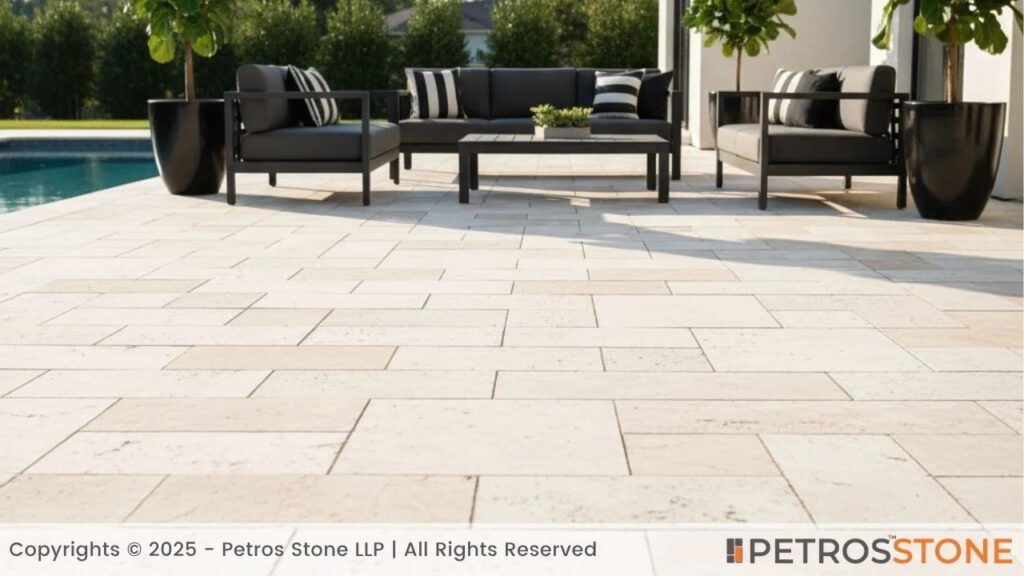
Table – Comparing Flagstone with Other Alternatives
| Feature | Flagstone | Concrete Pavers | Ceramic Tiles | Brick |
| Durability | Excellent — naturally dense and weather-resistant | Good — can crack over time or shift | Moderate — prone to chipping and breakage | Good — strong but can erode in damp climates |
| Slip Resistance | High — textured surface ideal for wet or outdoor areas | Medium — depends on surface finish | Low — smooth glaze makes it slippery when wet | Medium — moderately slip-resistant |
| Maintenance | Low — occasional cleaning and optional sealing | Moderate — may need leveling and sealing | High — grout cleaning and re-tiling required | Moderate — periodic washing and joint repair |
| Heat Retention | Low — stays cool underfoot in hot weather | High — absorbs and radiates heat | Medium — may become hot outdoors | Medium — warms up in sunlight |
| Eco-Friendliness | High — natural, non-toxic, and recyclable | Medium — made from processed materials | Low — requires high energy for production | Medium — natural clay but high firing energy |
| Cost Range (per sq. ft.) | Moderate to High ($15–$35 installed) | Low to Medium ($8–$20 installed) | Medium ($10–$25 installed) | Medium ($12–$22 installed) |
| Longevity | 50–100 years with proper care | 25–40 years, depending on maintenance | 15–25 years, shorter in outdoor settings | 40–75 years, depending on the climate |
| Appearance | Unique, natural look with rich color variations | Uniform shapes and colors, limited natural appeal | Sleek and modern but artificial in appearance | Classic, warm, and traditional aesthetic |
| Installation Complexity | Moderate to High — requires skilled labor for fitting and leveling | Easy — interlocking systems simplify setup | Moderate — needs an even surface and careful grouting | Moderate — involves careful alignment and mortar work |
| Versatility | Highly versatile — suits rustic or modern designs, indoors and outdoors | Versatile — many styles, but with a less natural look | Best for interiors and covered areas | Ideal for patios, paths, and facades |
| Weather Resistance | Excellent — handles freeze-thaw cycles well | Good — can crack under extreme temperatures | Poor — sensitive to frost and moisture | Good — can absorb moisture, requiring sealing |
| Ideal Applications | Patios, pathways, pool decks, walls, and interior floors | Driveways, walkways, patios | Bathrooms, kitchens, and indoor floors | Walkways, garden edges, courtyards |
In this article, we provide a closer examination of the formation, advantages, and maintenance of flagstone. It will assist you in making the decision whether this natural stone is the correct choice for your home or outdoor project.
The Nature and Character of Flagstone
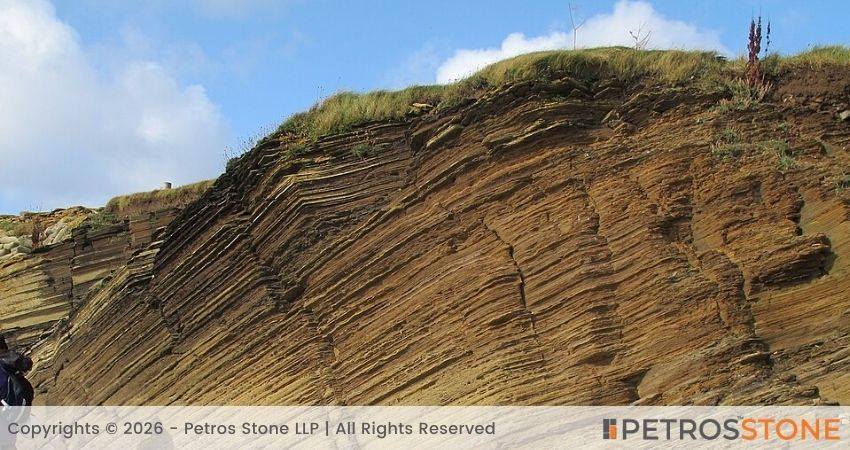
Geological Formation and Rock Types
A Flagstone is a type of sedimentary rock created by means of compacted sand, clay, or organic matter over a period of millions of years. Its stratified form provides a distinct flat split surface. The rock types commonly used as flagstone are:
| Type of Flagstone | Composition | Durability | Common Colors | Texture & Water Resistance | Best Use |
| Sandstone | Quartz and feldspar | Moderate to high | Buff, brown, tan, red | Slightly porous with a medium-grain texture; offers good slip resistance and natural drainage | Garden paths, patios, and decorative walls |
| Slate | Clay, volcanic ash, and mica | High | Gray, blue, green, purple | Smooth layered texture; excellent water resistance and slip resistance | Indoor flooring, pool decks, and wall cladding |
| Limestone | Calcite and marine sediment | Moderate | Beige, cream, gray, off-white | Fine texture; slightly porous and requires sealing in damp environments | Indoor floors, courtyards, and low-traffic patios |
| Quartzite | Recrystallized quartz-rich sandstone | Very high | Silver, gold, white, pink | Dense, glassy surface; highly resistant to water, heat, and scratches | Driveways, outdoor steps, and heavy-traffic areas |
| Bluestone | Sandstone with feldspar and iron content | High | Blue-gray, green, rust | Dense and smooth with a slight grain; naturally non-slip even when wet | Patios, walkways, and pool surroundings |
| Travertine | Calcite from mineral-rich hot springs | Moderate | Cream, tan, ivory, walnut | Porous with natural pits; stays cool underfoot and provides a soft, elegant texture | Pool decks, courtyards, and interior floors |
| Basalt (Lava Stone) | Solidified volcanic rock | Very high | Charcoal, black, dark gray | Dense, fine-grained, and extremely water-resistant; ideal for modern or minimalist designs | Patios, driveways, and exterior facades |
| Fieldstone | Naturally weathered surface stone | Variable (depends on origin) | Earthy tones—brown, gray, mossy green | Rough, irregular, rustic texture with good natural drainage | Garden paths, retaining walls, and rustic patios |
Color, Texture, and Natural Variation
The natural differences of Flagstone make every installation different. None of the stones is alike–they can be earthly brown and tan, deep blue, gray, and red. With its natural, rough surface that provides an excellent non-slip surface, it is suitable to be used outside, and polished finishes are used inside.
Artistic and Functional Versatility
Flagstone is used both as a decorative and a functional material. It is employed by artists in mosaics, sculptures in the garden, and cladding walls, and by architects in patios, steps, fireplaces, and paths. It balances both the rustic and the refined without making it declassé, which makes it suitable in both traditional and contemporary designs.
Flagstone in Landscape and Design
Flagstone’s Versatility – Indoors and Outdoors
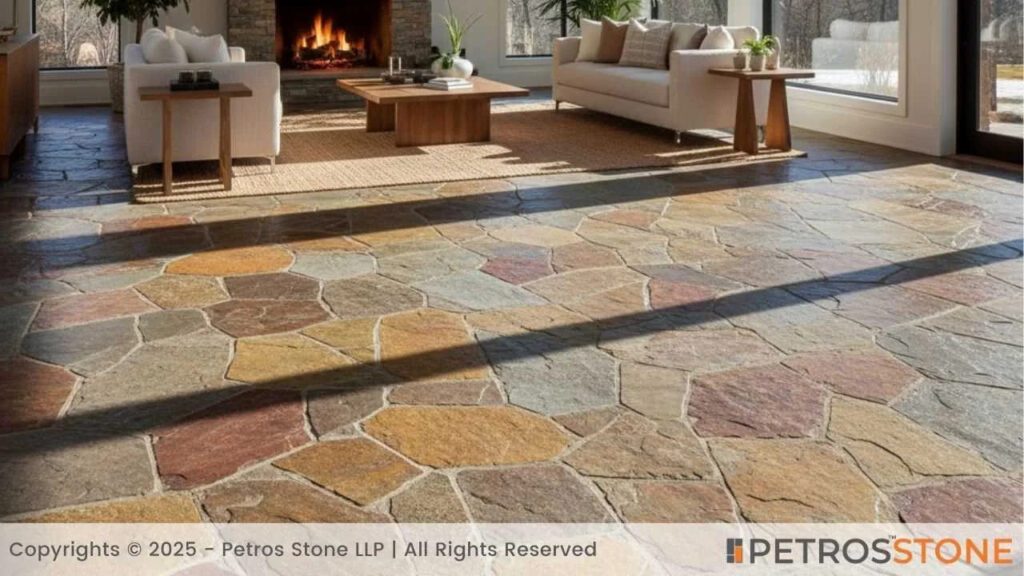
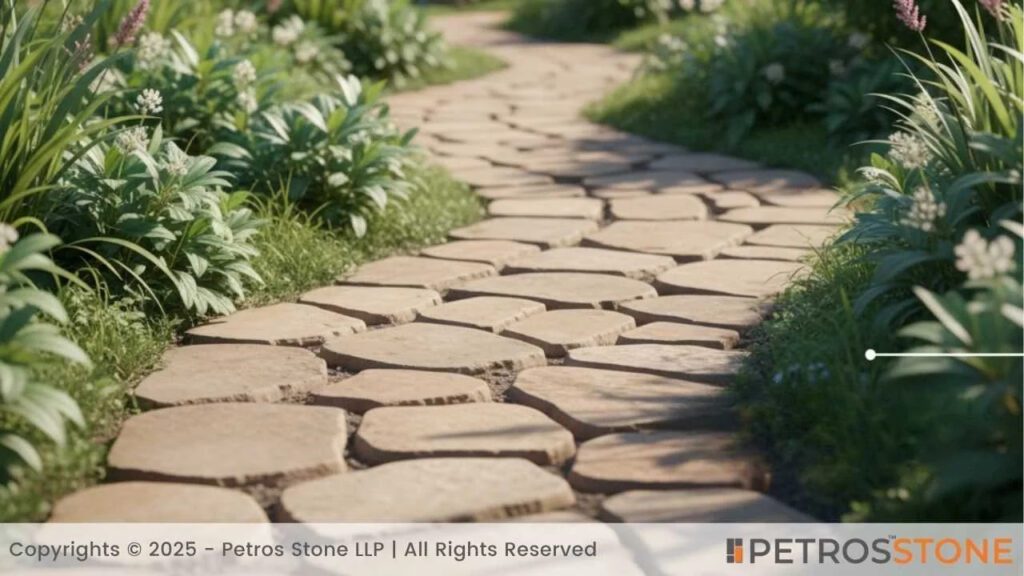
The Flagstone is a seamless blend of indoor and outdoor environments.
- Interior: Flooring, fireplace encasings, wall paneling.
- Outdoor: Patios, walkways, driveways, pool seating, and garden seats.
It is cool in summer and warm in winter due to its thermal quality, a natural warmth benefit, and this holds true for floors.
Signature Layouts and Patterns
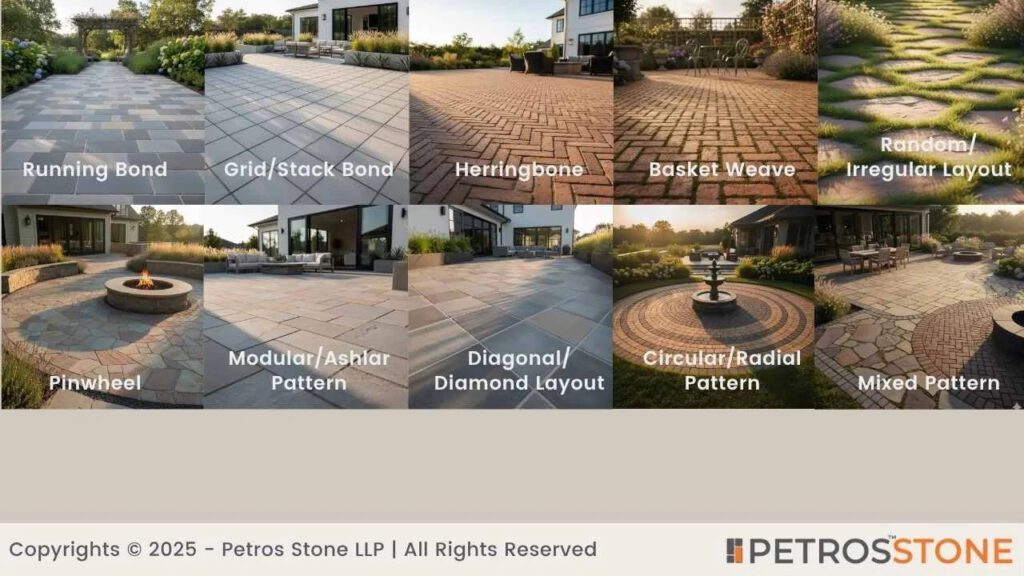
Flagstone can be laid in some patterns:
| Pattern Type | Description | Visual Effect |
| Random (Irregular) | Stones of different shapes and sizes fitted organically | Natural, rustic charm |
| Ashlar (Cut) | Geometrically cut pieces | Modern, structured appearance |
| Crazy Paving | Uneven fragments lay freely | Casual, artistic effect |
| Linear/Running Bond | Rectangular pieces in rows | Clean, formal design |
Integrating Flagstone with Other Materials
Flagstone can be used very well with wood, gravel, concrete, and brick. The visual balance may be achieved by a combination of materials – e.g., flagstone patio with brick or gravel sidewalks between wooden decks. Design flexibility and cost-efficiency are developed through integration.
Benefits Beyond the Surface
1. Enduring Strength and Timeless Appeal
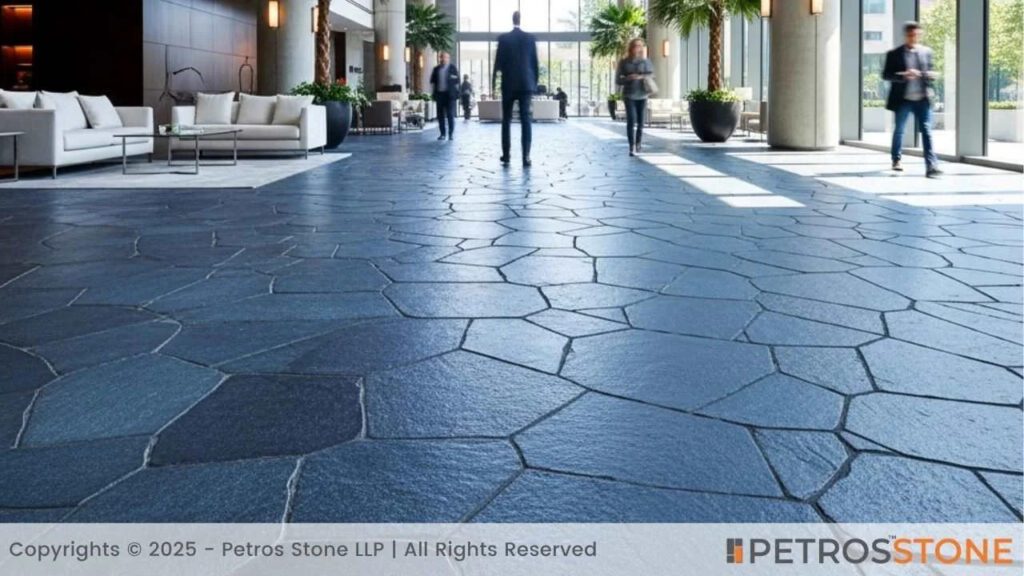
- Lasts for decades with minimal wear.
- Fade resistant, cracking resistant, erosion resistant.
- Assumes character and beauty with time.
One of the strengths that flagstone has is its durability. It has stood where seasons change, foot traffic is high, and natural weathering takes place. Old routes and yards hundreds of years old have not been demolished, which serves as an indication of their value over the course of time and classical beauty.
2. Comfort, Safety, and Accessibility
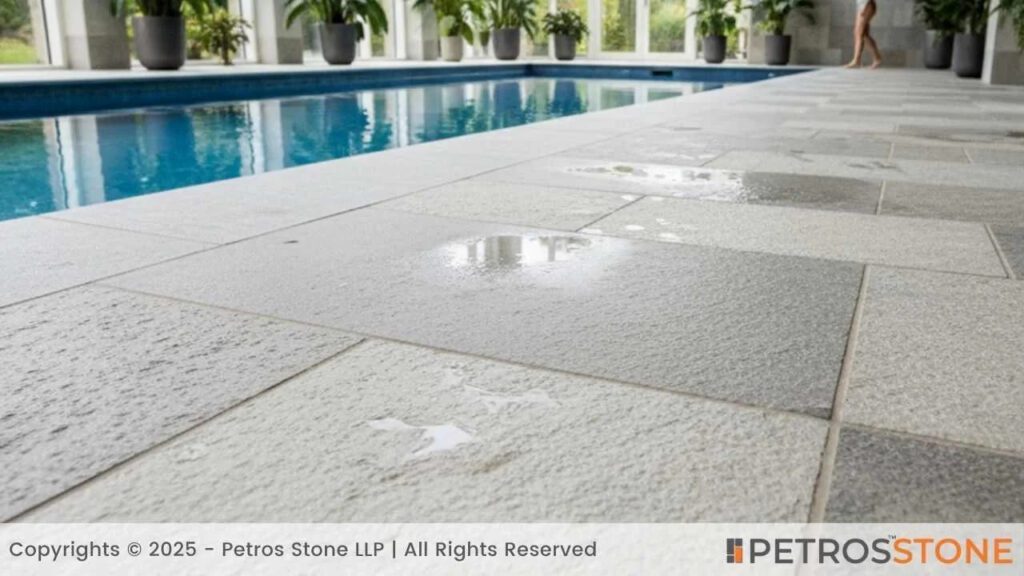
- Surface that is natural and unslippery.
- Cools better than concrete in hot climates.
- Should be used over pool decks, garden paths, and walkways.
The surface of Flagstone is rough to provide a safe ground, so it is safe to use with families, and this surface is safe to use in locations outside the building that are exposed to water. Its coolness on the feet is also beneficial in summer, giving it both utility and tranquility.
3. Impact on Property and Lifestyle
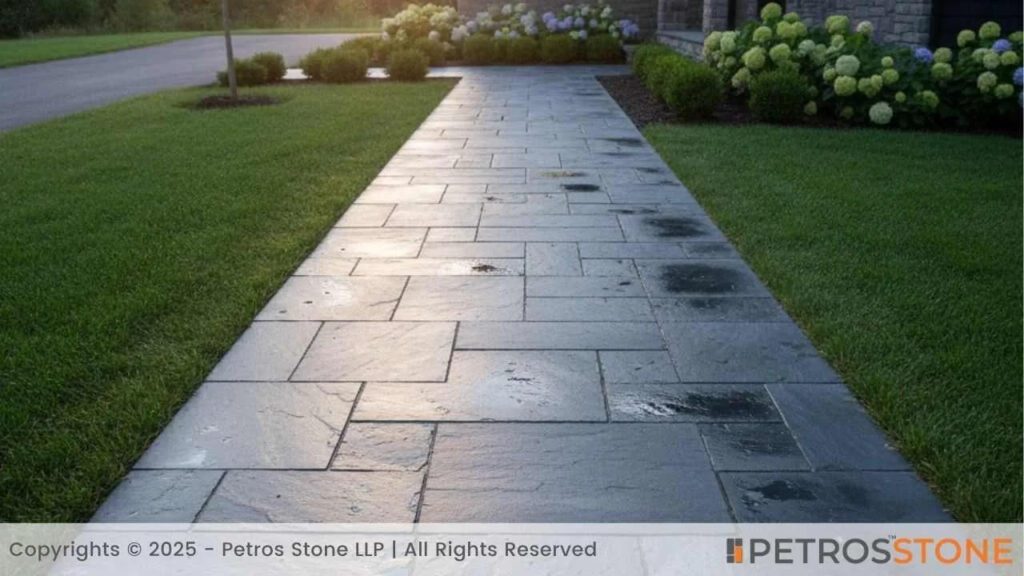
- Increases resale value and curb appeal.
- Couples with both natural and modern landscapes.
- Promotes a calm, nature-connected atmosphere.
An evenly spaced flagstone patio or walkway can lift the eye level, besides providing an amenity to the serene outdoor living environment. Its natural beauty blends with plants and provides pleasant areas that enhance the property price and health.
4. Low Maintenance and Easy Upkeep
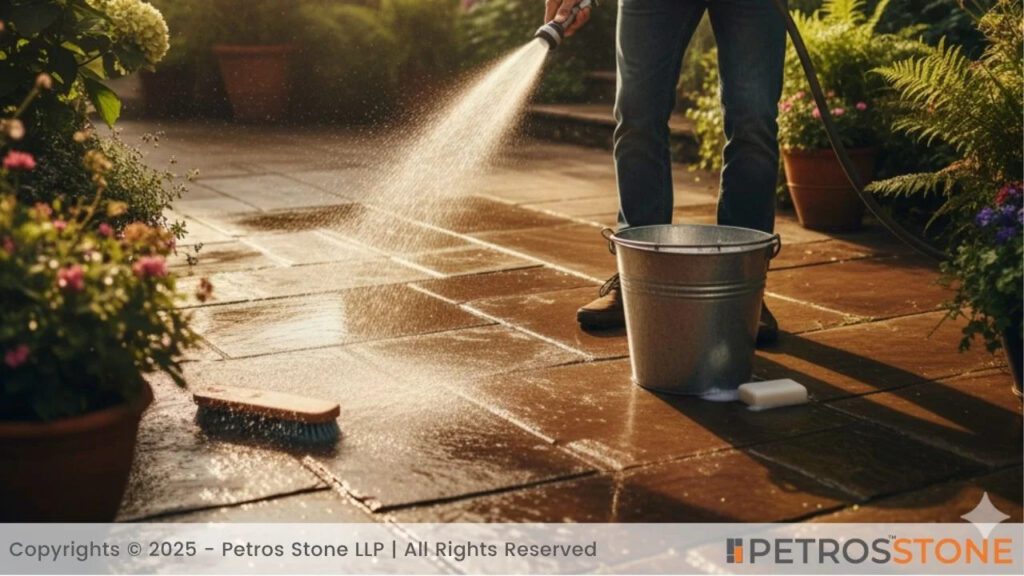
- Needs little cleaning up and sealing.
- Easily repels stains, moss, and fading.
- Individual stones are easily replaced in case of damage.
Flagstone is a permanent beauty that does not require any effort. Sweeping routinely and washing occasionally will suffice to keep its appearance clean. In contrast to concrete, which frequently requires repair or repainting, flagstone does not require much intervention to remain appealing.
5. Thermal and Acoustic Benefits
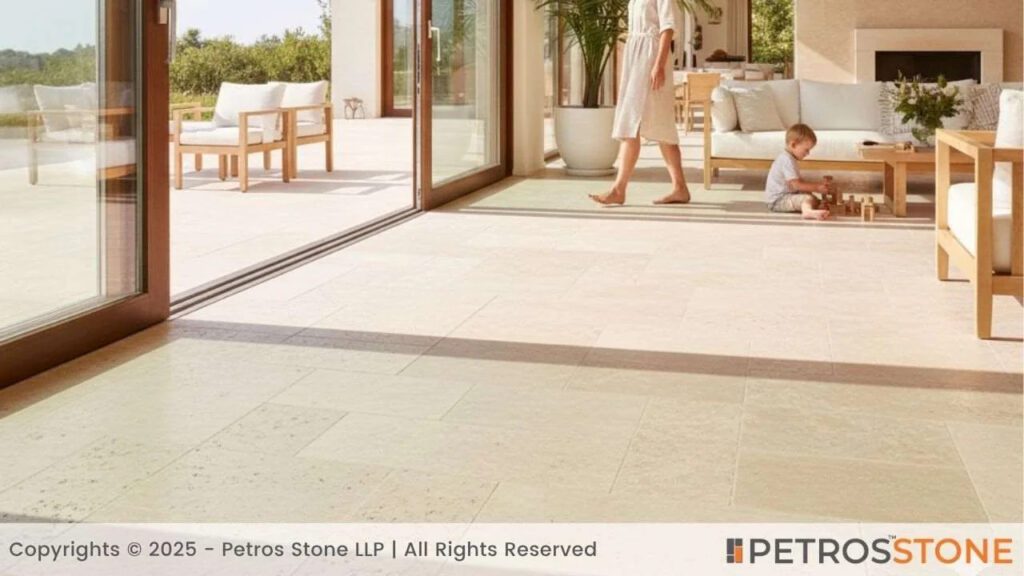
- Slowly absorbs and emits heat.
- Helps control the temperature in the immediate environment.
- Naturally absorbs sound, which minimizes outside noise.
The density of flagstone provides the stone with natural insulation. It maintains cooler temperatures on hot days and warmer weather in cooler months. Patios and courtyards are also quieter and more comfortable with the sound-absorbing property of it.
6. Eco-Friendly and Sustainable Choice
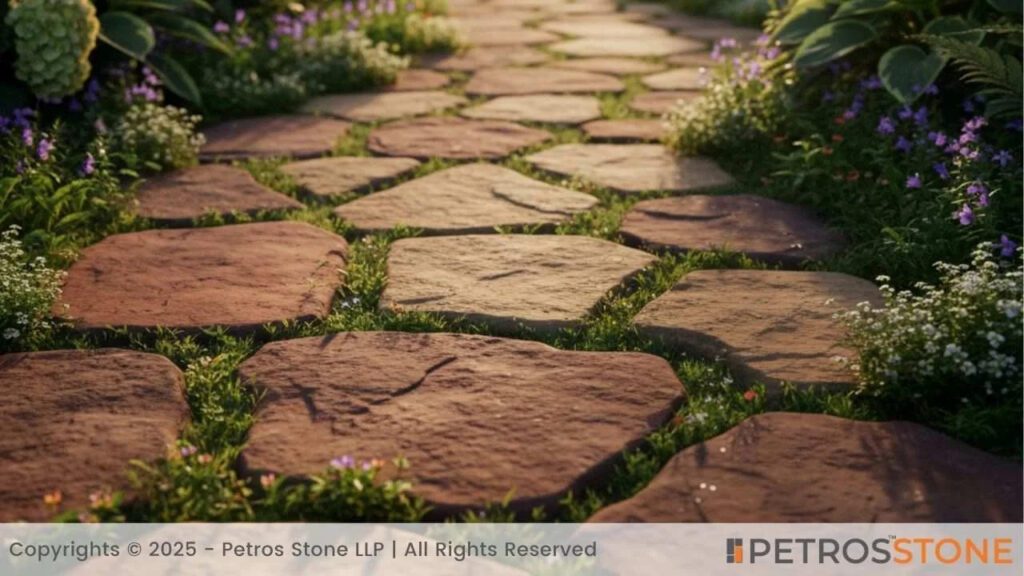
- Natural and toxic-free material.
- Locally available to save on transport.
- Helps to drain water by using a permeable installation.
As a natural stone, flagstone has a small footprint on the environment. Dry-lay techniques have the advantage of letting rainwater infiltrate the soil to contribute to groundwater restoration. It is even a more sustainable and ethical design choice because it involves tiles that were locally quarried or reclaimed stone.
The Realities of Flagstone Installation
Sourcing and Selection Strategies
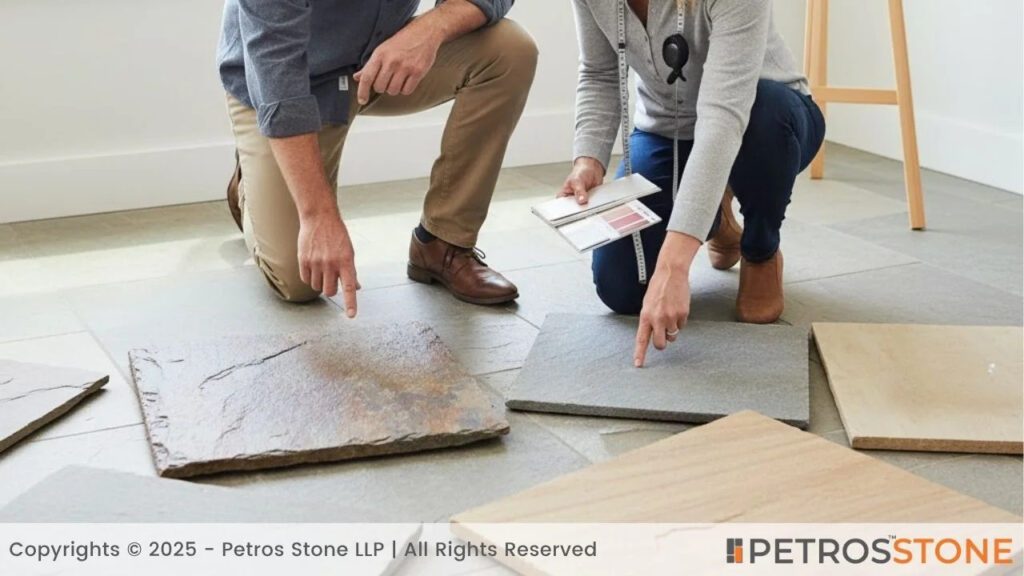
When purchasing flagstone, give your attention to:
- Origin: Local stone will minimize transportation expenses and environmental risks.
- Thickness: 1.5 to 2 inches. Stability is necessary for outdoor use.
- Color consistency: Small color discrepancies are acceptable, though select colors that blend with your buildings.
- Hardness: In case of driveways or heavy traffic use, quartzite or dense slate.
Site Preparation and Professional Insights
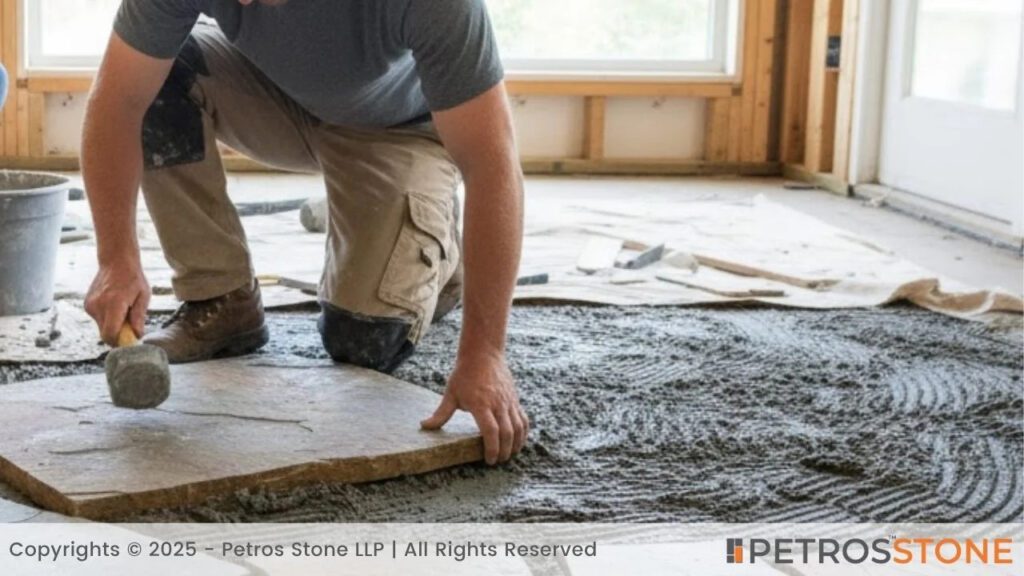
Base preparation is done properly to ensure durability. Key steps include:
- Excavating 4–6 inches of soil.
- A layer of base of compacted gravel was added.
- Installation of a sand or mortar bed.
- Arranging flagstones with small, smooth joints.
Experts usually advise pouring flagstone in busy or exposed places to water, which causes stains.
DIY vs Expert Installation
| Factor | DIY Installation | Professional Installation | Remarks |
| Cost | Lower upfront; saves on labor | Higher due to labor and equipment | DIY suits small projects; pros add long-term value |
| Skill Level | Basic masonry skills needed | Requires expert precision and experience | Mistakes in DIY may reduce durability |
| Durability | May be uneven or short-lived | Long-lasting and structurally sound | Proper base prep is key for both |
| Time Required | Several weekends or more | 2–4 days for an average patio | Professionals complete faster with planning |
| Tools & Equipment | Basic tools like a shovel, mallet, and chisel | Specialized tools and compactors | Tool access affects finish quality |
| Finish Quality | Often, irregular joints or gaps | Neat, even surface, and consistent layout | Expert installation ensures aesthetic appeal |
| Customization | Limited design complexity | Wide range of patterns and styles | Pros can match specific design goals |
| Safety | Risk of strain or injury | Trained in handling and safety gear | Heavy stones require caution |
| Warranty | No formal guarantee | Usually comes with a workmanship warranty | Adds peace of mind for homeowners |
| Long-Term Value | May need repairs sooner | High resale and long-term durability | Professional work offers better ROI |
However, DIY can be used in small garden paths. Professional installation would make patios, driveways, or pool decks last a long time.
Maintenance – Myths and Methods
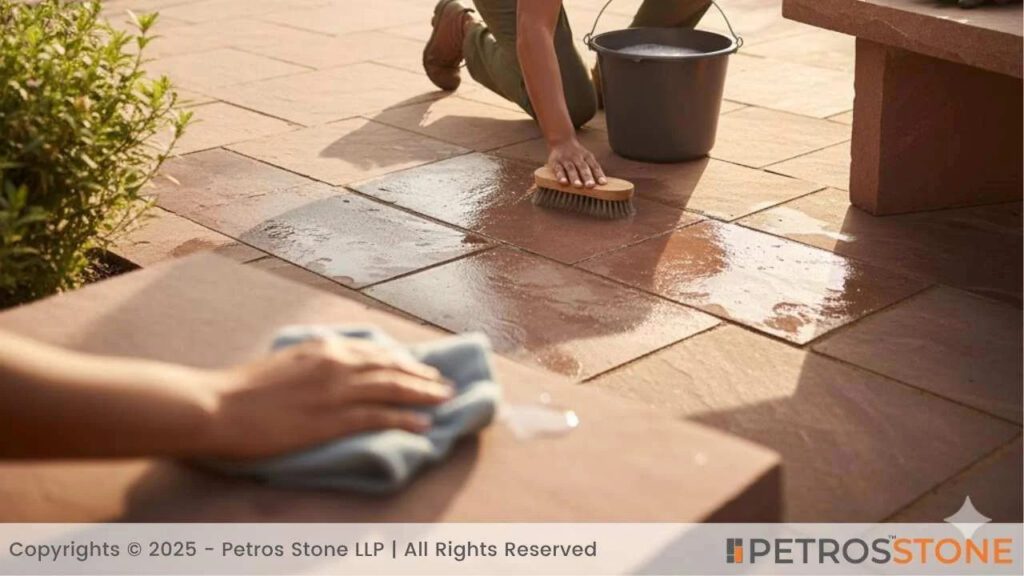
Preserving Flagstone’s Beauty
The flagstone requires minimal maintenance, as it is not maintenance-free. It is kept fresh by washing it regularly using mild water and soap. Strong acids or bleach should be avoided, as they may erode it.
Sealants are optional, but they help protect it from moss growth and stains. Select breathable covers to escape natural moisture.
Repair, Restoration, and Longevity
Loose stones, or cracks, can be repaired without difficulty:
- Change broken stones individually.
- Sand and mortar are used to refill joints.
- Reseal after every 3-5 years under heavy weathering.
Properly taken care of flagstone surfaces will last 50 or 100 years or longer.
Cost, Value, and Long-Term ROI

Upfront Investment vs. Lifecycle Cost
| Aspect | Flagstone | Concrete Pavers | Stamped Concrete |
| Material Cost (per sq. ft.) | $7–$15 | $3–$6 | $8–$12 |
| Installation Cost (per sq. ft.) | $10–$25 | $5–$10 | $7–$14 |
| Lifespan | 50–100 years | 25–40 years | 20–30 years |
| Maintenance Cost (annual) | Low | Moderate | Moderate |
| Resale Appeal | High | Medium | Medium |
The initial price is more expensive, but flagstone can be more economical in the long run because of durability, minimal maintenance, and market prices.
Resale Value and Buyer Perceptions
Customers consider flagstone walkways and patios as luxurious attributes. According to real estate agents, properties that have quality flagstone installations sell at a 5-10 percent higher rate of resale price, depending on the region and conditions.
Environmental and Ethical Perspectives
Sustainability and Green Alternatives
Builders have shifted to using local flagstone that has been quarried locally or reclaimed, and has lowered the carbon footprint. Installation techniques (such as the dry-lay technique) that are permeable assist in groundwater recharge and in preventing runoff.
| Eco-Friendly Option | Description | Environmental Benefit |
| Reclaimed Flagstone | Sourced from old buildings, pavements, or demolition sites and reused for new projects | Reduces quarry waste, saves natural resources, and adds rustic character |
| Dry-Lay Installation | Laid on compacted gravel or sand without cement or adhesives | Enhances soil permeability, allows groundwater recharge, and avoids chemical leaching |
| Local Sourcing | Stone was quarried and supplied from nearby regions | Minimizes transport-related carbon emissions and supports local industries |
| Recycled Base Materials | Use of crushed concrete or recycled gravel for the foundation | Reduces landfill waste and conserves virgin materials |
| Natural, Breathable Sealers | Plant-based or water-based sealants are used instead of solvent-heavy products | Prevents toxic runoff, preserves air quality, and allows stone to breathe |
| Minimal Waste Cutting | Efficient cutting and fitting to reduce offcuts and leftover stone | Optimizes resource use and reduces disposal waste |
| Native Landscaping Around Flagstone | Combining stone with native plants and groundcovers | Improves biodiversity, reduces irrigation needs, and creates eco-balanced spaces |
Comparing Flagstone with Popular Alternatives


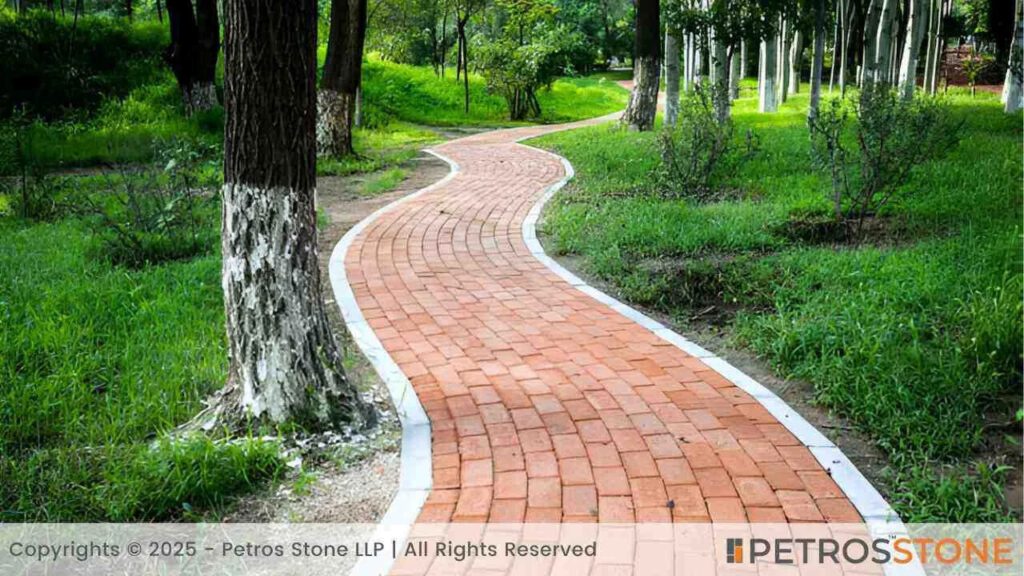
Table – Comparing Flagstone with Other Alternatives
| Feature | Flagstone | Concrete Pavers | Ceramic Tiles | Brick |
| Durability | Excellent — naturally dense and weather-resistant | Good — can crack over time or shift | Moderate — prone to chipping and breakage | Good — strong but can erode in damp climates |
| Slip Resistance | High — textured surface ideal for wet or outdoor areas | Medium — depends on surface finish | Low — smooth glaze makes it slippery when wet | Medium — moderately slip-resistant |
| Maintenance | Low — occasional cleaning and optional sealing | Moderate — may need leveling and sealing | High — grout cleaning and re-tiling required | Moderate — periodic washing and joint repair |
| Heat Retention | Low — stays cool underfoot in hot weather | High — absorbs and radiates heat | Medium — may become hot outdoors | Medium — warms up in sunlight |
| Eco-Friendliness | High — natural, non-toxic, and recyclable | Medium — made from processed materials | Low — requires high energy for production | Medium — natural clay but high firing energy |
| Cost Range (per sq. ft.) | Moderate to High ($15–$35 installed) | Low to Medium ($8–$20 installed) | Medium ($10–$25 installed) | Medium ($12–$22 installed) |
| Longevity | 50–100 years with proper care | 25–40 years, depending on maintenance | 15–25 years, shorter in outdoor settings | 40–75 years, depending on the climate |
| Appearance | Unique, natural look with rich color variations | Uniform shapes and colors, limited natural appeal | Sleek and modern but artificial in appearance | Classic, warm, and traditional aesthetic |
| Installation Complexity | Moderate to High — requires skilled labor for fitting and leveling | Easy — interlocking systems simplify setup | Moderate — needs an even surface and careful grouting | Moderate — involves careful alignment and mortar work |
| Versatility | Highly versatile — suits rustic or modern designs, indoors and outdoors | Versatile — many styles, but with a less natural look | Best for interiors and covered areas | Ideal for patios, paths, and facades |
| Weather Resistance | Excellent — handles freeze-thaw cycles well | Good — can crack under extreme temperatures | Poor — sensitive to frost and moisture | Good — can absorb moisture, requiring sealing |
| Ideal Applications | Patios, pathways, pool decks, walls, and interior floors | Driveways, walkways, patios | Bathrooms, kitchens, and indoor floors | Walkways, garden edges, courtyards |
When Flagstone Works and When It Doesn’t
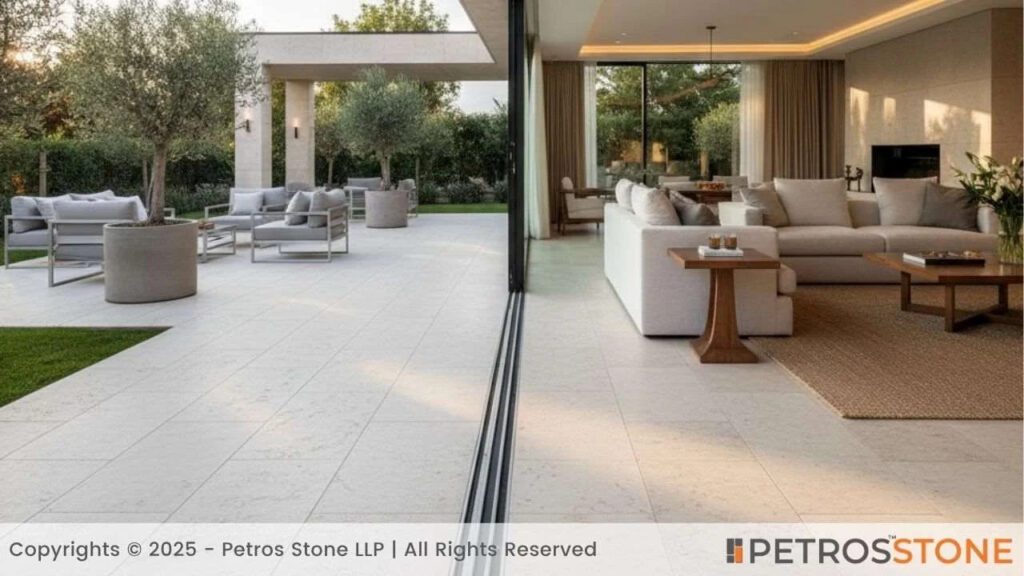
Flagstone Wins When:
- You desire natural beauty and a long life.
- Slip-resistance is a consideration.
- You prefer low maintenance.
- You appreciate eco-friendly and sustainable materials.
- You would like to add to the resale and aesthetic value of your property.
- Your project is outside, where there is exposure to the elements.
- You like original, non-repetitive designs that are character adding.
Flagstone May Not Be Ideal When:
- The budget is limited.
- You must have an even tone or print.
- It needs fast installation.
- The location does not have drainage or a stable base.
- You like a sleek and smooth appearance, with little change.
- You require a light material that is to be used on the rooftops or on the upper stories.
- The site of the project is an area with extreme freeze-thaw cycles, as well as very poor maintenance accessibility.
Common Pitfalls and How to Avoid Them
Environmental and Structural Challenges
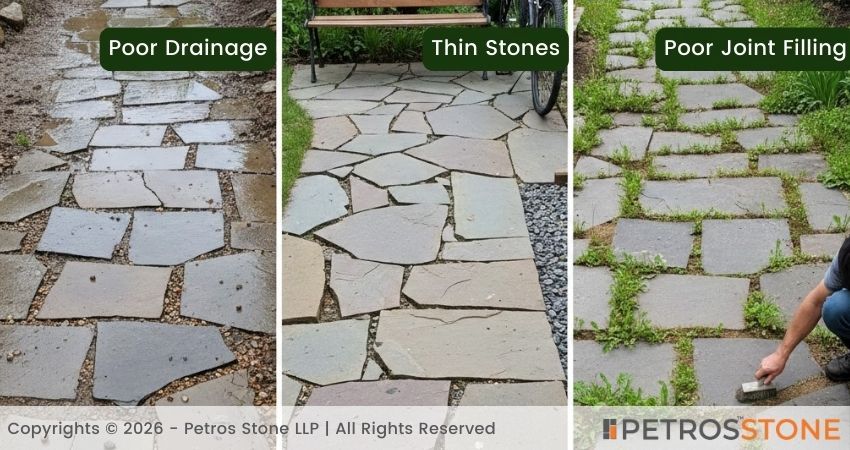
- Poor Drainage: Water will not drain correctly, resulting in stone heaving, movement, or erosion of rocks as time goes by. Make sure that there is a gentle slope and the base of the gravel is well compacted.
- Thin Stones: Can be easily broken or cracked under the heavy weight, like furniture or cars. In the case of outdoor installations, always use stones at least 1.5 -2 inches deep.
- Poor Joint Filling: Allows the growth of the weed and dislodging. Fill joints with polymeric mortar or polymeric sand and keep them in good condition.
User Stories – Mistakes and Fixes
| Common Mistake | Impact | Solution |
| Using soft limestone outdoors | Erosion, discoloration, and surface flaking over time | Choose harder stones like quartzite, slate, or dense sandstone for outdoor use |
| Skipping compacted base preparation | Uneven surface, shifting stones, and water pooling | Add 4–6 inches of compacted gravel and a sand/mortar leveling bed |
| No sealing in wet or shaded areas | Algae, moss, and mildew buildup | Apply a breathable, non-glossy sealer designed for natural stone |
| Tight mortar joints | Cracking during freeze-thaw cycles and poor drainage | Use flexible polymeric sand joints or wider mortar gaps |
| Uneven stone thickness | Tripping hazards and poor leveling | Sort stones by thickness before installation and adjust base depth accordingly |
| Poor drainage around patio or pathway | Standing water, frost heave, and premature wear | Create a slight slope (1–2%) away from structures for proper water runoff |
| Using non-breathable sealants | Trapped moisture causing surface peeling or white residue | Use breathable, penetrating sealers suitable for flagstone |
| Ignoring local climate conditions | Stones may crack or discolor under extreme temperatures | Select stone types suited to your climate (e.g., slate for cooler zones, sandstone for dry climates) |
| Using acidic or harsh cleaners | Surface etching and dull appearance | Clean with pH-neutral soap and soft brushes only |
| Failing to edge or contain the installation | Stones spread or shift over time | Install metal, brick, or concrete edging to secure perimeter |
| Laying flagstone directly on soil | Weed growth and unstable surface | Always install over a compacted gravel and sand base |
| Neglecting regular maintenance | Dirt buildup, staining, and surface dullness | Sweep regularly, wash annually, and reseal every 3–5 years |
| Poor joint filling or wrong filler material | Weed intrusion and loosening stones | Use polymeric sand or mortar depending on installation type |
| Mixing stone from different batches | Inconsistent color and texture | Purchase all stones from one batch or quarry for uniformity |
Lessons learned through such experiences allow homeowners to save on the cost of such repairs in the future.
Expert and Homeowner Opinions
Lessons from the Field
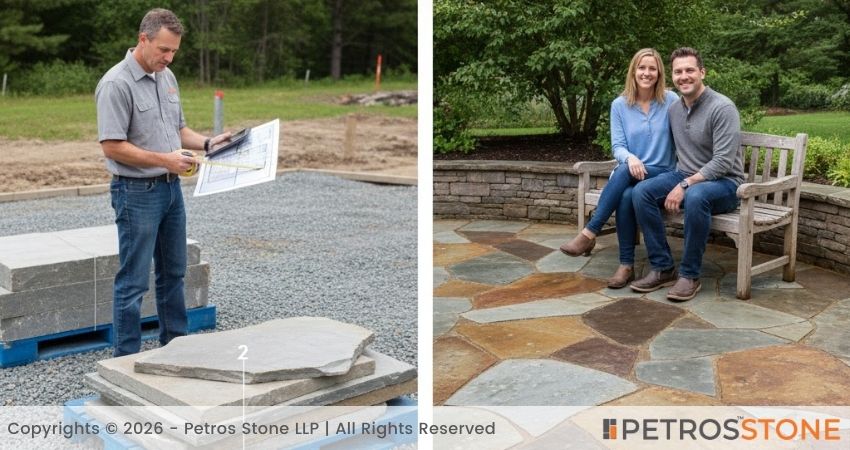
“Installation performance is defined not only by the stone type, but also by the quality of installation. Just as the professional advice above puts it, or without a good base, even good stone can break.”
“The variation of natural color conceals the dirt and gives an aesthetic plus. Natural texture and variation of flagstone are mentioned as a feature of popularity by many experts.”
“Sealing is not a must, but it is good to use in high-moisture climates: The maintenance instructions state that flagstone does not need much maintenance, but it can be sealed in some situations.”
Is Flagstone Right for You?
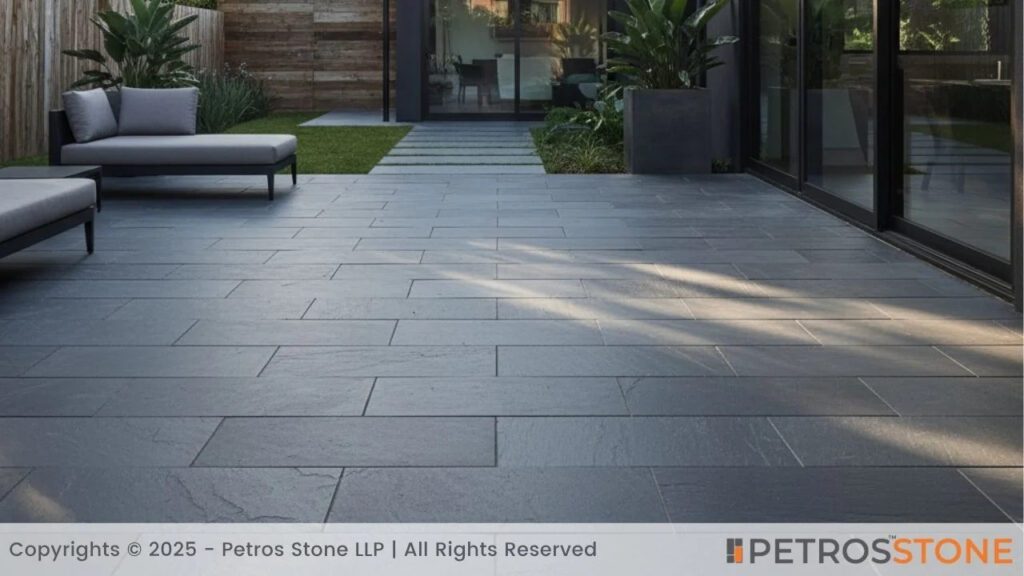
Decision-Making Framework
The checklist below can be used to determine whether flagstone is appropriate for your project:
| Question | Yes | No |
| Do you value natural aesthetics over uniformity? | ☐ | ☐ |
| Are you willing to invest in professional installation? | ☐ | ☐ |
| Do you want a surface that lasts decades? | ☐ | ☐ |
| Is your site well-drained and stable? | ☐ | ☐ |
| Do you prefer low-maintenance materials? | ☐ | ☐ |
| Is environmental sustainability important to you? | ☐ | ☐ |
If the vast majority of responses are a “Yes”, flagstone most probably will be ideal.
Final Checklist
You should definitely read this brief summary before making your final decision:
- Select the appropriate variety of stones (slate or indoor and quartzites used in driveways).
- Make adequate base preparation for drainage.
- Have flexible joints where there are freeze-thaws.
- Consider sealing high-traffic areas.
- Purchase suppliers with a good reputation or that are locally based.
- Clean with soft solvents- not acidic ones.
Key Takeaways
- Timeless appeal: Flagstone remains one of the most visually pleasing and architecturally enduring natural materials.
- Natural beauty: Its organic texture and earthy tones add warmth, character, and a strong connection to nature.
- Versatile use: Ideal for patios, pathways, landscaping, and interior flooring.
- Exceptional durability: Dense structure resists cracks, wear, and extreme weather conditions.
- Improves with age: Unlike artificial materials, flagstone often becomes more attractive over time.
- Low maintenance: Requires only occasional cleaning and sealing to maintain color and texture.
- Slip-resistant surface: Safe for wet areas such as poolsides and garden paths.
- Long-term cost efficiency: Reduced replacement and repair needs lower overall lifetime expenses.
- Enhances property value: Boosts curb appeal and is often perceived as premium masonry work.
- Strong return on investment: Higher upfront cost is balanced by longevity, beauty, and durability.
- Blends tradition with modern design: Serves as a bridge between natural heritage and contemporary architecture.
- Symbol of strength and elegance: Combines resilience with timeless aesthetic value.
Feel free to get in touch for a free consultation, quote, and get a detailed understanding from our experts here at Petros®. Visit https://petrosscape.com/ or call +91-8446360361 and WhatsApp

Hello!
I’m Dr Mridali, a content writer with a background in dentistry and a passion for turning complex topics into clear, engaging stories. From healthcare to architecture, I create blogs that inform, educate, and connect with readers. With every piece, I aim to blend accuracy with creativity to make information truly valuable.