

Flagstone Pavers Price | 10 Options with Price
Here’s a list of all 10 most popular Flagstone Paver options:
- Bluestone
- Sandstone
- Slate
- Limestone
- Quartzite
- Travertine
- Flagstone Veneer (Manufactured)
- Indian Sandstone
- Porcelain Flagstone Pavers
- Reclaimed Flagstone
Flagstone pavers typically cost ( USD 0.75 to 5.5 per sq. ft.), depending on stone type, thickness, and finish. Indian sandstone is more affordable, while dense quartzites are priced higher due to superior strength and durability.

They are widely used outdoors for their natural slip resistance, weather resistance, and timeless look. However, pricing depends not just on material, but also on quarry quality, calibration, and logistics (FOB vs CIF). In practice, uncalibrated stone may increase installation cost, while calibrated pavers ensure faster laying and consistency.
In this article, we cover 10 flagstone paver options with updated pricing and key cost factors like thickness, grading, and FOB vs CIF logistics. We also compare performance using ASTM standards and real site insights to help you choose the right stone based on durability, not just price.
Flagstone Pavers Price Table
| # | Stone Type | Price (USD / sq.ft.) | Pricing Basis | Typical Thickness | Key Use Areas |
|---|---|---|---|---|---|
| 1 | Bluestone | $6 – $14 | Imported / premium quarry | 20–40 mm | Driveways, patios |
| 2 | Sandstone (General) | $1.0 – $2.5 | Indian quarry base rates | 15–30 mm | Garden paving |
| 3 | Slate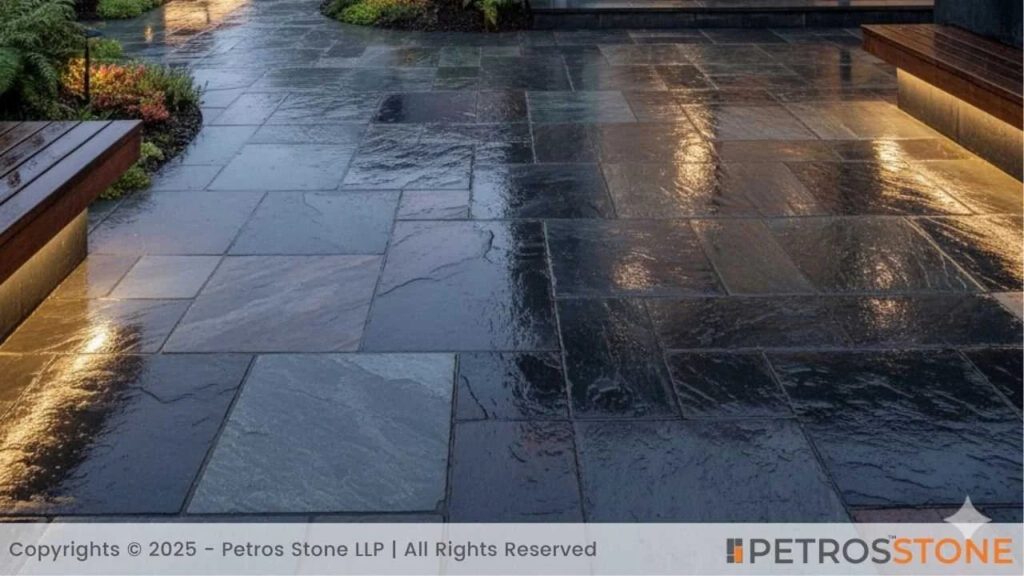 | $3 – $7 | Indian + imported mix | 10–25 mm | Walkways |
| 4 | Limestone | $2.5 – $6 | Kota / imported limestone | 15–30 mm | Patios, pool decks |
| 5 | Quartzite | $4 – $10 | High-grade metamorphic stone | 15–25 mm | Heavy traffic areas |
| 6 | Travertine | $5 – $12 | Imported (Turkey/Italy) | 12–30 mm | Pool decks |
| 7 | Flagstone Veneer | $3 – $6 | Engineered / lightweight | 8–15 mm | Walls, light paving |
| 8 | Indian Sandstone (Export Grade) | $0.9 – $2.6 | Direct Petrosstone pricing | 18–25 mm | Landscaping |
| 9 | Porcelain Pavers | $6 – $14 | Factory manufactured | 16–20 mm | Modern patios |
| 10 | Reclaimed Flagstone | $3 – $8 | Salvaged material | Variable | Rustic paving |
In this article, we explore 10 commonly used flagstone options with latest pricing, along with insights on grades, finishes, and best-use applications, helping you choose based on performance, not just price.
What Are Flagstone Pavers?
Flagstone pavers are slabs of natural stone that have been cut in bedding planes. Outdoor flooring is often done with these stones because they have natural resistance against slipping and weather durability.
Technical Properties
| Property | Typical Range | Practical Significance |
| Thickness | 1″ – 2.5″ | Heavier slabs (2+) can be used in driveways and high-traffic zones, and lighter slabs (1″-1.5) are used on patios and walkways. |
| Water Absorption | 0.5% – 6% | Absorption less than 1 per cent represents superior frost and weather resistance, whereas an increased absorption places a stone in need of sealing to avert water attack. |
| Compressive Strength | 8,000 – 25,000 psi | Evaluates the load-bearing qualities of the stone; the psi of high load-bearing stones, such as quartzite and bluestone, is desirable in driveways and high-traffic areas. |
| ASTM Standard | C97 / C170 | Defines procedures for testing compressive strength and density; compliance guarantees predictable stress performance. |
| Hardness (Mohs) | 4 – 7 | Establishes resistance to scratch and wear; quartzite (c. 7) is very hard, sandstone (c. 4-5) is softer and cut easier. |
| Density | 2.2 – 2.8 g/cm³ | Influences the weight and effort to install; more dense stones are heavier but more durable. |
| Slip Resistance | Varies by finish | Cleft-finished stones are naturally slip-resistant; honed or smooth surfaces might need further work in moist places. |
The long-term durability is most significantly determined by water absorption and density, particularly in freeze-thaw regions, according to the Natural Stone Institute.
Key Factors That Influence Flagstone Paver Prices
Material Type
- Quartzite and bluestone are hard and more durable, and can be used in high-traffic places.
- Sandstone and limestone – less strenuous, easier to cut, less expensive initially.
- Stones of greater hardness – more difficult to quarry and further expensive to process- reduced long-term upkeep.
- Softer stones – cheaper and might be necessary to seal where they are prone to water absorption and staining.
Thickness and Size
- Thicker slabs – more material, heavier, and more expensive.
- Thin slabs – require less material, are cheaper, but less appropriate in heavy-load areas.
- A ton of flagstone may cover 70 to 140 sq. ft. on account of thickness and density.
- Larger slabs – will have fewer joint lines, but more complex transportation and handling.
Finish and Edge Style
- Natural cleft – stone texture remains, less expensive.
- Machine-cut edges – uniform, more accurate, more expensive to process.
- Honed, tumbled, or sawn finishes affect appearance and cost.
- Finishes blend → enhance aesthetics, add a bit of expense.
Geographic Availability and Shipping
- Transport contributes significantly to the price.
- Home stone – increased quarry cost, reduced transportation cost.
- Imported stone – low FOB price at the expense of freight and insurance charges.
- Export is dominated by India and Turkey, with Turkey carrying about 70 percent of U.S. flagstone imports in 2024.
- Landed cost can be affected by shipping delays, fluctuations in fuel, and customs fees.
Installation Method
- Dry lay – $4-8 per sq. ft., quicker to install, less labour cost.
- Mortar set → $10–$22 per sq. ft., more labor-intensive, more durable.
- Base preparation, drainage, and stone thickness – also determine total installation cost.
10 Flagstone Paver Options with Price
A useful comparison of these 10 most popular flagstones and their price, applications, and essential considerations is described below.
1. Bluestone
Description & Best Use – Bluestone is a thick and tough natural stone that can be used very well on patios, walkways, pool decks, and even on driveways. Its robustness enables it to resist the situation when foot traffic is heavy and freeze-thaw, which makes it a safe bet in colder areas. The fine texture of the stone and its natural cleft provide a non-slip surface to the eyes.
Price – $6 – $14 per sq. ft.
Pros
- Very tough and durable.
- Weatherproof, frostproof, freeze-thaw proof.
- Naturally textured, with a slip-resistant quality.
Cons
- Limited colour range, predominantly blue-grays to lilac.
- Relatively expensive in comparison with softer stones.
Installation – It is heavy and will require a well-compacted base (solid). Placing larger slabs can be done with the help of mechanical assistance.
Colors/Texture – Blue-gray, lilac; natural cleft or thermal finish
2. Sandstone
Description & Best Use – Sandstone is a softer, easy-to-cut stone that is perfect for laying out gardens, patios, and other landscape features. It is very versatile and provides a natural, rustic appearance to the outdoor areas.
Price – $1.0 – $2.5 per sq. ft.
Pros
- Inexpensive and ubiquitous.
- Easy to cut and designed to fit individual patterns.
- Has an extensive color and pattern selection.
Cons
- Higher water absorption than harder stones.
- Needs a coating to avoid staining and water wear.
Installation – Both dry-lay and mortar-set installations are appropriate. With correct base preparation, the chance of settling over time is minimized.
Colors/Texture – Beige, red, brown; riven or honed finish
3. Slate
Description & Best Use – Slate is a layered metamorphic rock with a natural cleft surface. It is best in the paths, patios, and outdoor flooring that demand slip resistance.
Price – $3 – $7 per sq. ft.
Pros
- Naturally slip-resistant.
- Surface texture improves aesthetic qualities.
- Durable in moderate climates.
Cons
- May flake or delaminate with time.
- Irregular thickness can complicate installation.
Installation – Requires careful placement so as to avoid flaking; might require shimming or leveling of slabs.
Colors/Texture – Black, green, rust; natural cleft
4. Limestone
Description & Best Use – Limestone is an elegant, smooth stone that is usually used in patios, walkways, and pool decks. It offers a soft feel to the feet and a uniform, traditional appearance.
Price -$2.5 – $6 per sq. ft.
Pros
- Elegant and uniform appearance.
- Comfortable to walk barefoot.
- Performs well in formal landscapes or modern landscapes.
Cons
- sensitive to acids and staining.
- Needs to be sealed well to be lasting.
Installation – Requires a well-prepared and well-drained base; to prevent weathering and staining, sealing is advisable.
Colors/Texture – White, cream, gray; honed or brushed finish
5. Quartzite
Description & Best Use – Quartzite is a very dense and hard stone, which can be used in high trafficking areas, driveways, and other commercial outdoor fastenings. It is extremely tough, which makes it very tough on wear and water uptake.
Price – $4 – $10 per sq. ft.
Pros
- Highly durable and strong.
- Low water absorption and frost-resistant.
- Lasts several decades.
Cons
- Difficult to cut and shape, which increases the labor costs.
- Due to weight and hardness, the installation cost increases.
Installation – Expertise and professional tools are suggested. A solid foundation and cautious positioning are crucial.
Colors/Texture – White, gray, gold; crystalline texture
6. Travertine
Description & Best Use – Travertine is used in pool decks, patios, and terraces due to its naturally cool surface and slip-resistant tactile feel.
Price – $5 – $12 per sq. ft.
Pros
- Comfortable underfoot, even in hot climates.
- Slip-resistant surface ideal for wet areas.
- Brings natural beauty to outdoor facilities.
Cons
- Porous, needs filling and sealing.
- Can stain if not maintained
Installment – Generally, mortar-set for stability; proper base and drainage are advisable.
Colors/Texture – Beige, ivory, walnut; tumbled or honed finish
7. Flagstone Veneer (Manufactured)
Description & Best Use – Manufactured flagstone veneer is a lightweight substitute similar to natural stone. It is also suitable in decorative patios, walls, and in places where weight becomes important, and there is interior/outdoor use.
Price – $3 – $6 per sq. ft.
Pros
- Lightweight and convenient to handle.
- Clean layouts of uniform size and appearance.
- Quicker installation than natural stone.
Cons
- Not as durable as natural stone.
- Minimal natural texture and variation.
Installation – Can be installed quickly with adhesive or mortar; can be used on vertical and horizontal surfaces.
Colors/Texture – A wide variety of designs meant to appear like natural stone
8. Indian Sandstone
Description & Best Use – Indian sandstone is an inexpensive natural stone choice that is used in large landscaping projects, commercial patios, and garden paths.
Price – $0.9 – $2.6 per sq. ft. (landed)
Pros
- Cos- effective in mass projects.
- Widely available in export markets.
- Can be cut and shaped easily
Cons
- Minor variations in color among batches.
- A little less hard than quartzite or bluestone.
Installation – Can be used in either dry-lay or in mortar-set construction; needs to be carefully chosen to ensure visual consistency.
Colors/Texture – Buff, gray, multi-color; natural riven
9. Porcelain Flagstone Pavers
Description & Best Use – The porcelain flagstone pavers are designed to be used in contemporary patios, terraces, and high-style landscapes. They imitate the look of natural stone, yet provide uniformity and low maintenance.
Price – $6 – $14 per sq. ft.
Pros
- Low maintenance.
- Stain-resistant, frost-resistant, and waterproof.
- Consistent finish suitable for contemporary designs.
Cons
- Higher upfront cost.
- Needs a correct leveling and adequate base preparation.
Installation – Requires a stable base with mortar or adhesive; careful leveling ensures longevity.
Colors/Texture – Stone-look finishes in uniform shades
10. Reclaimed Flagstone
Description & Best Use – Reclaimed flagstone is reused from previous construction or landscape projects. It is ideal for environmentally friendly designs, old-fashioned patios, and garden decorations.
Price – $3 – $8 per sq. ft.
Pros
- Eco-friendly and sustainable.
- Unique, weathered appearance.
- Gives a historical feel to designs.
Cons
- Limited availability.
- Uneven sizing might need further cutting and sorting.
Installation – Works best with professional and skilled installers; should be sorted, tiled, and adjusted to be uniform.
Colors/Texture – Mixed tones with natural weathered texture
How to Save on Flagstone Pavers Without Compromising Quality
- Buy in bulk (FOB pricing): By ordering more, it is possible to reduce the cost per unit and increase bargaining power.
- Select dry installation: Dry laying saves on the mortar costs and saves on labor costs.
- Use standard sizes: Standard sizes will reduce the time taken to cut, reduce wastage, and decrease the time taken to install.
- Source from export hubs: Countries such as India and Turkey provide competitive prices because of the high volume of production.
- Plan for 5–10% extra material: Avoids the last-minute shopping at a higher price.
- Optimize thickness selection: utilize thinner stone under walkways and heavier slabs in areas where the structure is demanding.
- Compare landed cost, not just retail price: Never decide before considering shipping, duties, and handling fees.
Comparing Flagstone to Other Materials


| Material | Price (USD/sq. ft.) | Installed Cost (USD/sq. ft.) | Durability | Maintenance Level | Lifespan | Slip Resistance | Key Advantage | Key Limitation |
| Flagstone | $3 – $6 | $12 – $30 | High | Medium | 30–50 yrs | High | Natural look, long-lasting | Requires sealing, higher labor costs |
| Concrete | $2 – $6 | $8 – $15 | Medium | Low | 20–30 yrs | Medium | Low cost, easy installation | Can crack over time |
| Brick | $5 – $10 | $10 – $20 | Medium | Medium | 25–40 yrs | Medium | Classic appearance, easy repair | Can shift or settle |
The comparisons in international pricing indicate similar ranges with an average price of US flagstone between $3–$5 per sq. when it comes to material alone.
FAQs
1. What is the cheapest option?
Indian sandstone is considered the cheapest flagstone material due to its mass quarrying and export competence. Buyers are advised to consider sealing and minimal color differences when selecting this choice.
2. Why does the price vary?
The prices of flagstone are changing based on several issues, including stone type, thickness, finish, and origin. Final pricing is also directly influenced by market factors such as fuel prices and the availability of containers.
3. Is imported stone reliable?
Yes, the imported stone is good when it is provided by reputable sellers and inspected properly. Numerous exporters comply with ASTM standards and offer a steady supply of quality for large-scale operations.
4. What is the biggest risk?
Breakage during transit and natural color variation across batches are the biggest risks associated with flagstone. Poor packaging or shipping can result in an approximation. loss of 5-7% in materials.
5. Does flagstone last long?
The flagstone is very robust and is able to survive 30-50 years or beyond when properly laid down. Other stones, such as quartzite and bluestone, are particularly effective in heavy use and harsh weather. It all depends on the correct base preparation, drainage, and regular maintenance, such as sealing. Poor installation may shorten the lifespan despite the quality of the stone.
Key Takeaways
- Price depends on more than stone type – Thickness, finish, quarry grade, and logistics (FOB vs CIF) significantly impact the final cost.
- Global supply chain influences pricing – India and Turkey dominate exports (as per DGFT trends), making freight and availability key cost drivers.
- Logistics can change total cost – From factory experience, packaging, freight fluctuations, and handling often affect landed cost more than base material price.
- Performance is driven by technical properties – Lower water absorption and higher strength (ASTM C97, C170) ensure better durability, especially outdoors.
- Focus on total project cost – Include material, installation method, transport, and maintenance, also account for risks like breakage and batch variation.
Feel free to get in touch for a free consultation, quote, and get a detailed understanding from our experts here at Petros®. Visit https://petrosscape.com/ or call +91-8446360361 and WhatsApp

Hello!
I’m Dr Mridali, a content writer with a background in dentistry and a passion for turning complex topics into clear, engaging stories. From healthcare to architecture, I create blogs that inform, educate, and connect with readers. With every piece, I aim to blend accuracy with creativity to make information truly valuable.