

Flagstone Alternatives | 6 Substitutes That Are Better
Homeowners, architects, and landscape designers are busy seeking alternatives to flagstones today with a view to finding ones that last longer, are safe, cheaper, and appealing to the eye.
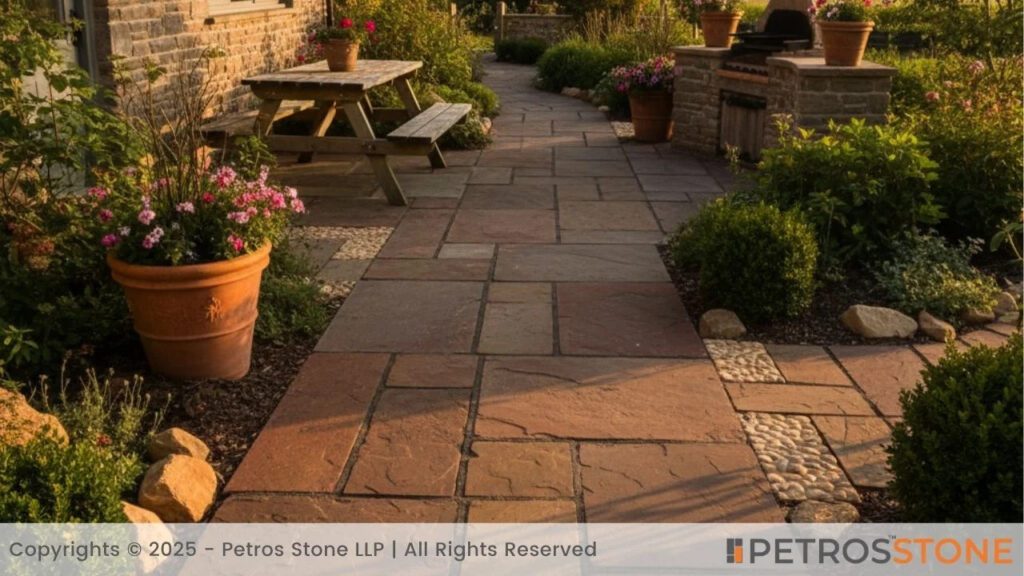
Here are the Top 6 Flagstone Alternatives:
- Granite Paving
- Crushed Stone or Decomposed Granite
- Slate Stone
- Limestone Pavers
- Bluestone
- Cobblestone / Basalt Setts
Two Best Flagstone Alternatives (Expert Recommendation)
These are the best flagstone substitutes for most homes:
Granite Paving
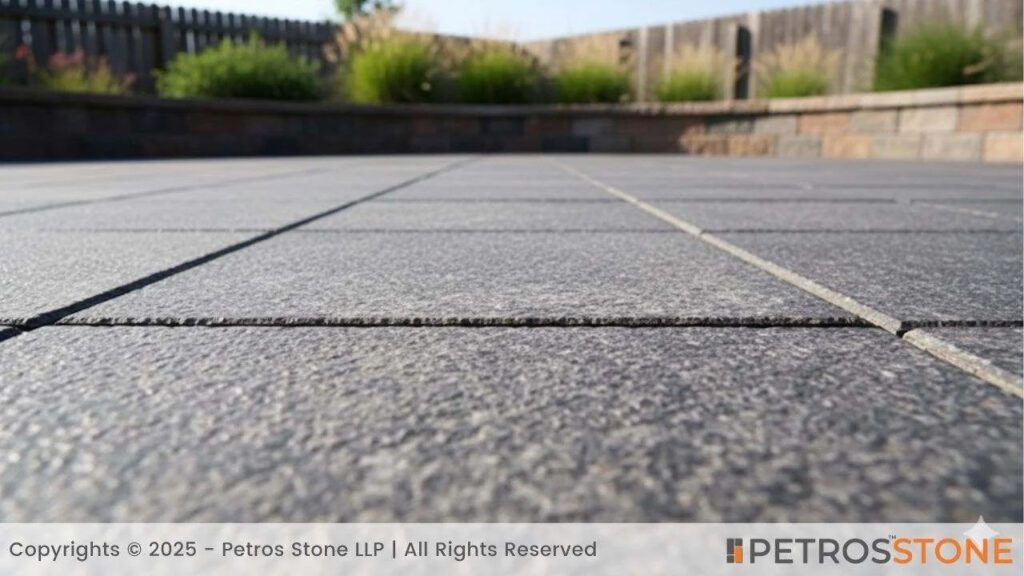
Granite paving is one of the strongest natural stone options available. It handles heavy loads, resists staining, and performs exceptionally well in harsh climates. If you want a long-term, low-maintenance alternative to traditional flagstone, granite is a top-tier choice.
- Excellent durability
- Extremely weather-resistant
- Low water absorption
- Clean, modern appearance
- Perfect for driveways, patios, and heavy-traffic areas
Bluestone
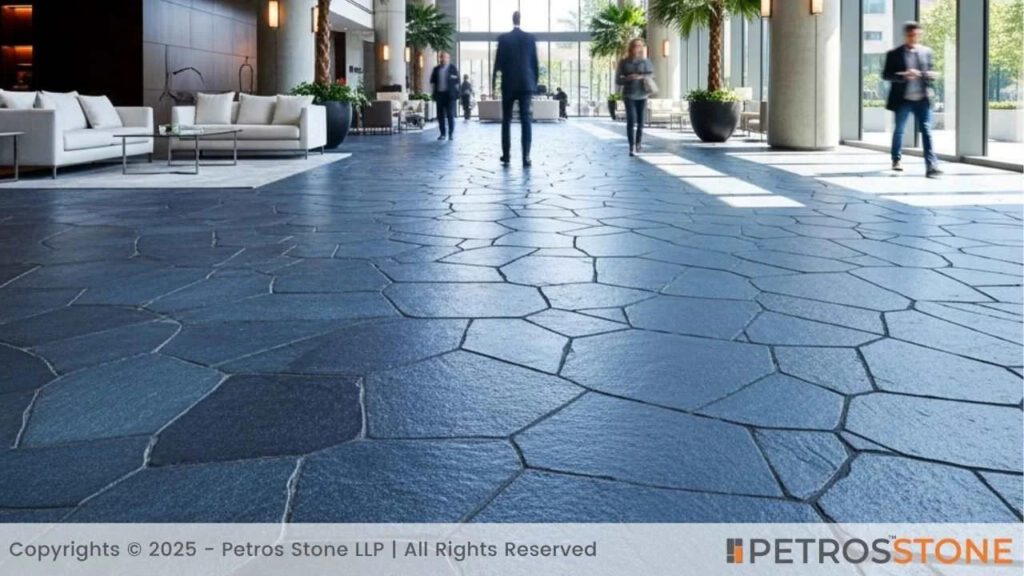
Bluestone is a premium natural stone widely used in outdoor landscaping. It offers the classic flagstone look but with more consistent color and strength. Its natural cleft texture provides strong grip, making it especially suitable for pool areas and rainy climates. At the same time, its clean blue-grey tones give outdoor spaces a refined, upscale feel.
- Excellent Durability
- Very slip-resistant
- Clean, premium appearance
- Perfect for patios and pool decks.
Comparative Overview Table
This table gives a quick snapshot of how popular flagstone alternatives compare:
| Material | Durability | Aesthetic Appeal | Budget / Cost | Ease of Installation | Maintenance Level | Slip Resistance | Best Used For |
| Granite Paving | Very High | Modern & Clean | Medium–High | Medium | Low | Good | High-traffic patios, driveways, and walkways |
Decomposed Granite / Crushed Stone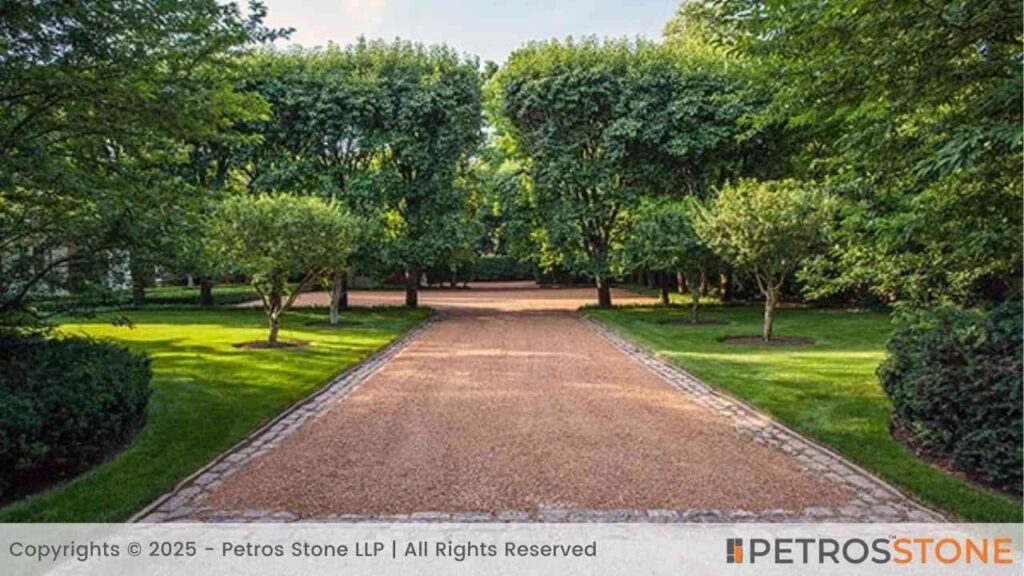 | Low–Medium | Natural & Rustic | Low | Very Easy | Medium | Very Good | Garden paths, informal walkways |
Slate Stone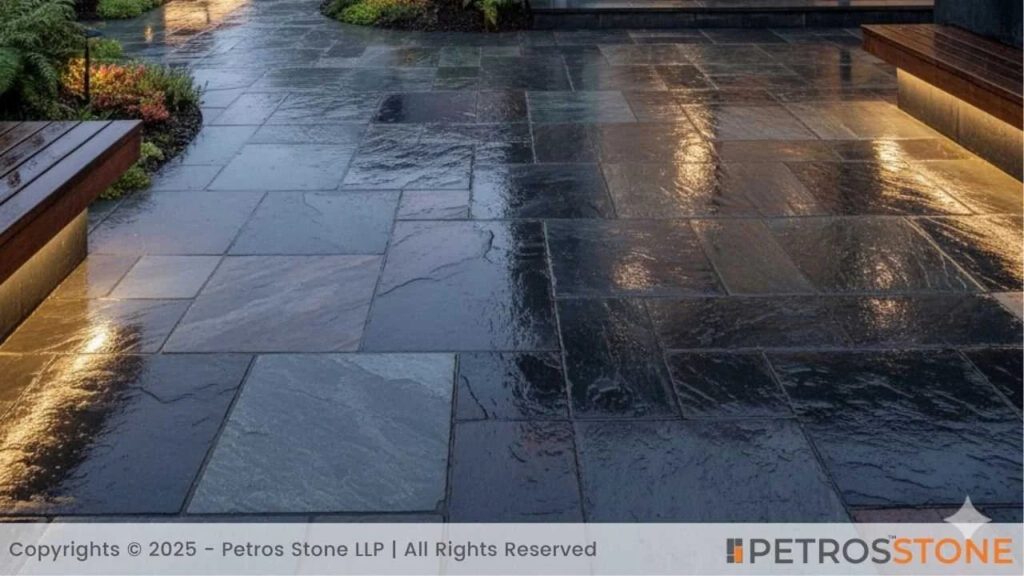 | Medium–High | Elegant & Textured | Medium | Medium | Medium | Very Good | Stylish patios, seating areas |
Limestone Pavers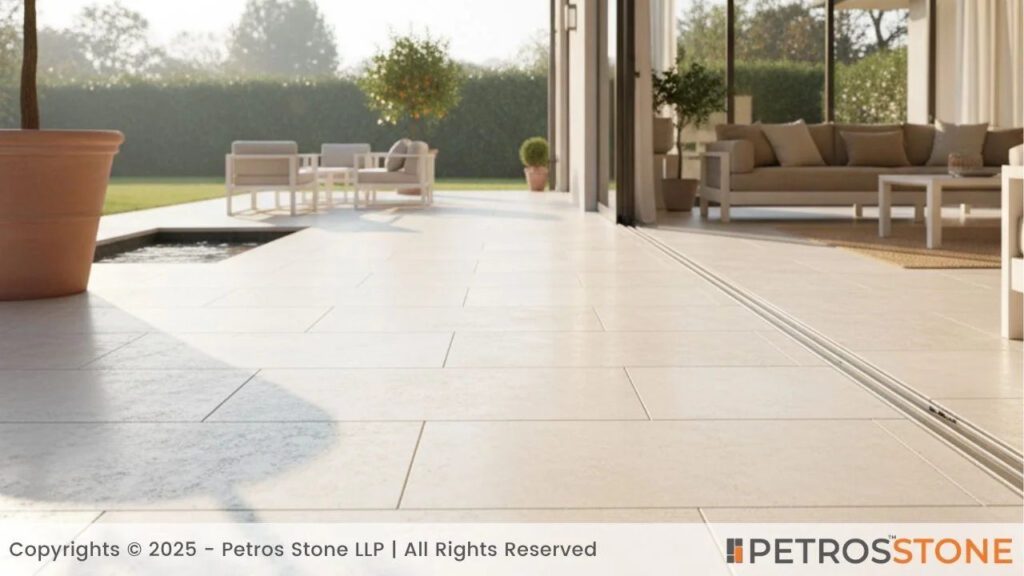 | Medium | Soft & Natural | Medium | Easy | Medium | Good | Pool decks, warm-climate patios |
| Bluestone | Very High | Premium & Uniform | High | Medium | Medium | Excellent | Luxury patios, pool areas |
Cobblestone / Basalt Setts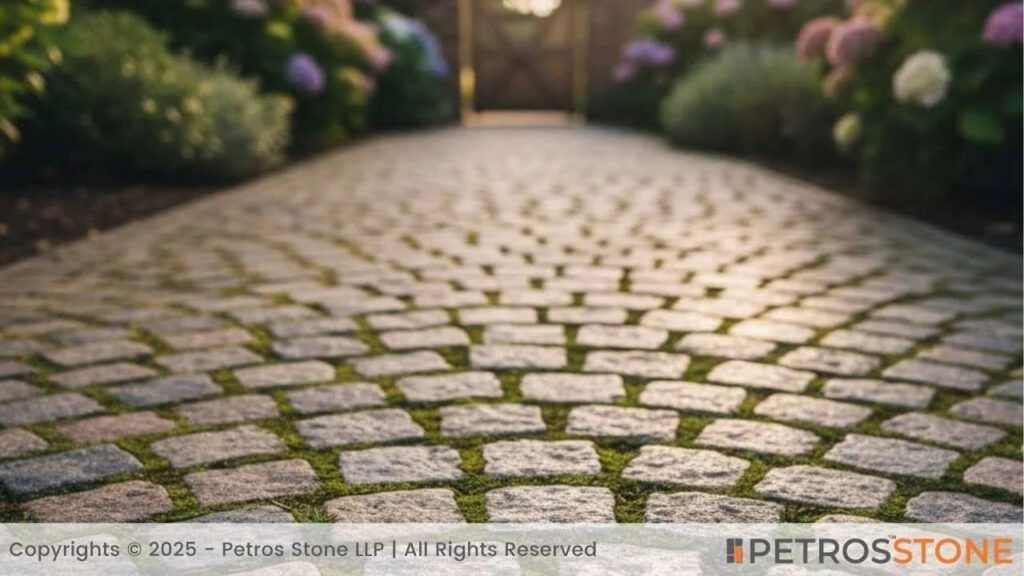 | Extremely High | Traditional & Timeless | High | Difficult | Low | Very Good | Courtyards, driveways, heritage spaces |
In this article, we explore six powerful flagstone alternatives that offer better durability, safety, and long-term value for outdoor spaces. We compare granite, bluestone, limestone, slate, decomposed granite, and cobblestone based on strength, cost, maintenance, and installation requirements. Most importantly, we help you choose the right material based on climate, traffic, budget, and design goals.
What to Look for in a Flagstone Alternative
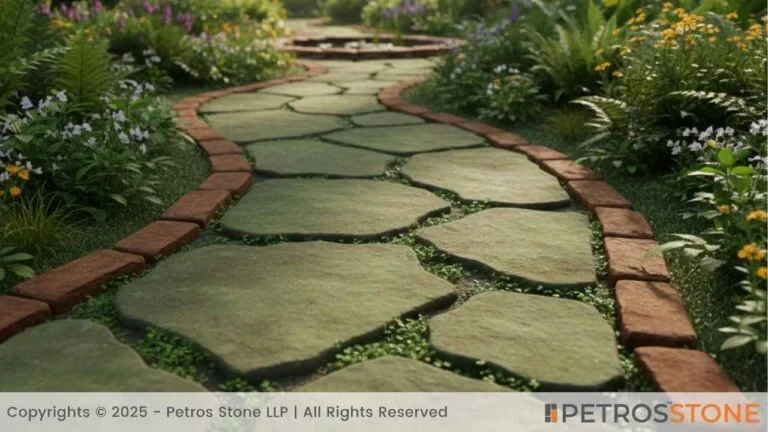
The selection of a substitute for flagstone is never merely about appearance. The material you choose should work out for many years outdoors. The topmost considerations before making a decision are listed below.
Key Characteristics to Evaluate
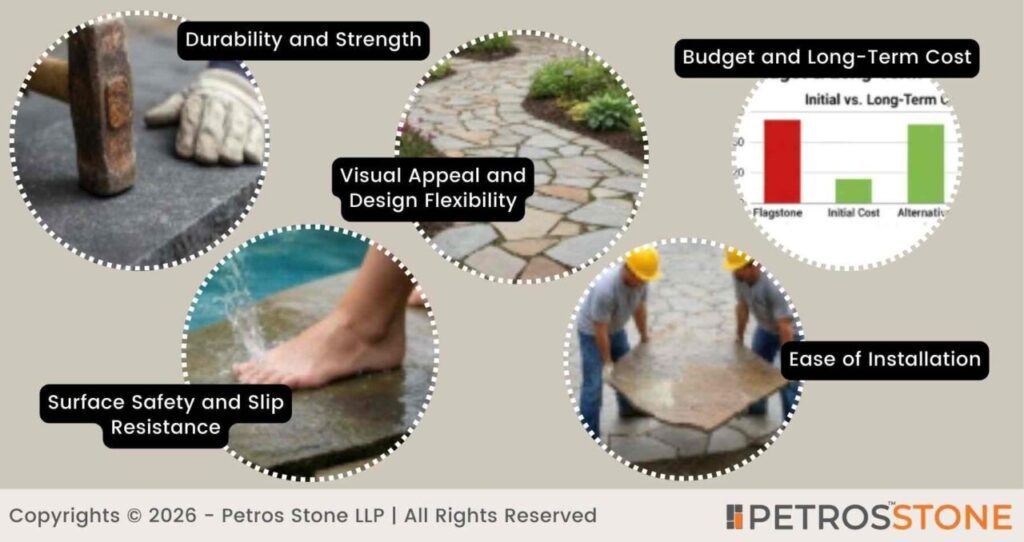
1. Durability and Strength
The outdoor paving materials are subjected to continuous exposure to seasonal expansion and contraction.
An effective substitution of a flagstone must resist cracks, chips, and abrasion marks. The durability of materials such as granite, basalt, and bluestone is very high.
2. Surface Safety and Slip Resistance
Unbalanced or slippery floors may be unsafe, particularly around pools, garden paths, and sloped walkways.
There are flagstone surfaces that are slippery when wet. There are numerous other options available with textured finishes that enhance grip and safety.
3. Visual Appeal and Design Flexibility
There are individuals attracted to natural and irregular appearance, while there are some who want clean lines and uniform shapes. The alternatives of flagstones offer greater consistency and customization.
4. Ease of Installation
Flagstone is bulky and irregular, and this renders the installation process time-consuming and expensive. Many alternatives are easier to install, thus reducing the labor costs.
5. Budget and Long-Term Cost
Always consider the material, installation, and repair costs. There are cases where a slightly costly material would be cheaper in the long run.
Average Flagstone Alternative Price Comparison Table
| Material | Average Price per sq. ft. |
| Natural Flagstone | ≈ $3.85 – $7.70 |
| Granite Paving | ≈ $4 – $8 |
| Bluestone | ≈ $4 – $8 |
| Limestone Pavers | ≈ $2 – $4.5 |
| Slate Stone | ≈ $3.30 – $6.60 |
| Decomposed Granite | ≈ $1 – $2.5 |
| Cobblestone / Basalt | ≈ $4 – $9 |
| Concrete Pavers | ≈ $2 – $8 |
| Porcelain Outdoor Tiles | ≈ $2 – $8 |
| Brick Pavers | ≈ $2.20 – $4.40 |
Prices may vary depending on thickness, finish, and region.
Quick Interpretation
- Best overall durability: Cobblestone / Granite
- Best premium look: Bluestone
- Best budget option: Decomposed Granite
- Best for easy installation: Decomposed Granite, Limestone
- Best slip resistance: Bluestone, Slate
6 Best Flagstone Alternatives
1. Granite Paving
Overview
Granite is a very hard natural stone. It is highly popular in office premises, street pavements, and residential gardens. Being a flagstone option, granite is consistent, strong, and has a smooth look.
Pros
- Robust
- Scratch- and crack-resistant
- Low water absorption
- Handles heavy foot traffic
Cons
- Hard surfaces can be less comfortable
- Can be expensive
- Needs a good preparatory base
Performance Rating
| Parameter | Rating |
| Durability | 9/10 |
| Aesthetics | 8/10 |
| Budget / Pricing | 6/10 |
| Ease of Installation | 6/10 |
| Maintenance | 8/10 |
| Slip Resistance | 7/10 |
Granite paving is deemed as one of the most dependable and sturdy stands over flagstone. It is a high-pressure natural stone that is very hard and difficult to crack, chip, and wear out on its surface. Granite provides even thickness and neat edges compared to flagstone, which means that it provides a more stable and safe walking surface.
Key points to consider:
- Great in patios, walkways, driveways, and heavy traffic.
- It can be used in extreme high temperatures, high precipitation, and in freeze-thaw conditions.
- Less water uptake suppresses staining and moss proliferation.
To get the maximum benefit, granite should have a solid foundation and professional installation, as the slabs are heavy. Although it can be more expensive than simple paving materials, the ability to last a long time and have few maintenance requirements makes it economical in the long term.
Granite is best suited to be used by homeowners who desire a contemporary, stable, and durable option that requires minimal maintenance, as opposed to the conventional flagstone.
2. Crushed Stone or Decomposed Granite
Overview
Decomposed granite (DG) is composed of granite rocks that break down into tiny particles due to weathering. It is popular in garden paths, gardens where people sit casually.
Pros
- Very affordable
- Natural and organic appearance
- Excellent drainage
- Easy DIY installation
Cons
- Unsuitable for heavy furniture
- Needs periodic refilling
- Can shift over time
Performance Rating
| Parameter | Rating |
| Durability | 5/10 |
| Aesthetics | 6/10 |
| Budget / Pricing | 9/10 |
| Ease of Installation | 9/10 |
| Maintenance | 6/10 |
| Slip Resistance | 8/10 |
Popular substitutes of flagstone used by homeowners who would like a natural appearance at a reduced cost include crushed stone and decomposed granite (DG). In contrast with solid stone slabs, DG makes a softer and more informal surface that is well known among landscapes and gardens. Its installation is far easier and quicker compared to flagstone, and thus can suit forms of DIY projects.
Key points to consider:
- Ideally suited to garden paths, courtyards, and walkways of low traffic.
- Allows good water drainage, minimizing puddles and erosion.
- In fresh earth colors that will match the outdoor surroundings.
Nevertheless, decomposed granite cannot offer the same solidity as stone paving. Gradually, it can develop scars and need to be filled in or smoothed over occasionally.
A stabilized DG can enhance longevity, but will increase the expense. In general, crushed stone or decomposed granite is perfect when cost, simplicity, and natural casual look are more significant than longevity or high traffic.
3. Slate Stone
Overview
Slate is a fine-grained metamorphic rock that is characterized by intense colors and a layered texture. It offers a polished substitute to traditional flagstone.
Pros
- Attractive natural colors
- Good slip resistance
- Works well in patios and paths
Cons
- Can flake or delaminate
- Requires sealing
- Less durable than granite
Performance Rating
| Parameter | Rating |
| Durability | 7/10 |
| Aesthetics | 9/10 |
| Budget / Pricing | 6/10 |
| Ease of Installation | 6/10 |
| Maintenance | 6/10 |
| Slip Resistance | 8/10 |
Slate stone is a widely used alternative flagstone as it has a more sophisticated and fancy outlook and has retained a natural dimension. In comparison with the classical flagstone, the slate is composed of a smoother surface with enhanced color ranges, including grey, bluish, greenish, and rustic tones. This renders it a favorite on elegant patios, walkways, and outdoor seating spaces.
Key points to consider:
- Good slip resistance is provided by a naturally textured surface.
- Use in patios, garden paths, and low to medium traffic.
- Improves the appearance of outside environments with high quality and cleanliness.
Slate, however, is a layered rock and hence it is subject to peeling or delamination with time, when subjected to extreme weather conditions. It must be sealed well to avoid being exposed to the elements, such as moisture and stains. Although slate is not as strong as granite or basalt, under proper installation and maintenance, it is stronger than most of the basic flagstones.
Slate is most appropriate in the case of the homeowner who is more concerned with aesthetic appeal than durability.
4. Limestone Pavers
Overview
In warm regions, limestone pavers are most common because of their cool surface and light tones. They provide a design that is soft, elegant, and suitable for luxury landscapes.
Pros
- Cool underfoot
- Light, calming colors
- Easy to cut and install
Cons
- Softer stone
- Prone to staining
- Not suitable for freezing climates
Performance Rating
| Parameter | Rating |
| Durability | 6/10 |
| Aesthetics | 8/10 |
| Budget / Pricing | 7/10 |
| Ease of Installation | 8/10 |
| Maintenance | 6/10 |
| Slip Resistance | 7/10 |
Limestone pavers are a good alternative to flagstones and are used when a natural, soft, and elegant appearance of an outdoor setting is required by the homeowner. Limestone has a better consistency of surfaces and provides a smoother appearance than flagstone, and thus patios and walkways feel easier and more balanced. Its lightweight colors also allow keeping surfaces colder, which is particularly practical in hot climates.
Key points to consider:
- Easy to walk on, and cooler than most dark stones.
- Simple to cut and fix because of a softer composition.
- Combinations of contemporary and traditional landscape designs.
But limestone is also a softer rock and may be more susceptible to staining and wearing away on the surface unless sealed well. It cannot withstand frosty regions or extreme weather conditions.
Limestone pavers are ideal in residential patios, garden paths, and pool surrounds where comfort and beauty are more crucial than high durability.
5. Bluestone
Overview
One of the topmost quality and trustworthy flagstone substitutes is bluestone. It is powerful, safe, and beautiful in appearance.
Pros
- Highly durable
- Naturally slip-resistant
- Uniform thickness and shape
Cons
- Higher cost
- Heavy material
- Professional installation suggested
Performance Rating
| Parameter | Rating |
| Durability | 9/10 |
| Aesthetics | 9/10 |
| Budget / Pricing | 5/10 |
| Ease of Installation | 6/10 |
| Maintenance | 7/10 |
| Slip Resistance | 9/10 |
Bluestone is regarded as one of the best premier substitutes for flagstone because of its good balance of durability, security, and beauty. In contrast to old flagstone, bluestone is typically cut into consistent stone dimensions and shapes, creating a cleaner and more refined finish and more secure overlay surfaces. That is why it is often chosen in patios, pool decks, and luxury exterior living environments.
Key points to consider:
- Very strong and can accommodate heavy pedestrian traffic.
- Non-slip surface, suitable for wet places.
- The deep blue-grey colors give it an updated and classic appearance.
When installed and sealed correctly, Bluestone can withstand hot and cold climates. Although the material cost is more expensive than that of many of what has replaced flagstone, the long life and low replacement requirements can make it a good long-term investment.
Bluestone suits the homeowner who desires a sophisticated, long-lasting exterior finish to their home without having to deal with either safety or appearance.
6. Cobblestone / Basalt Setts
Overview
Cobblestones and basalt setts are stones in small and dense blocks, traditionally used in courtyards and streets.
Pros
- Extremely durable
- Timeless appearance
- Very long lifespan
Cons
- Uneven surface
- Labor-intensive installation
- Expensive
Performance Rating
| Parameter | Rating |
| Durability | 10/10 |
| Aesthetics | 7/10 |
| Budget / Pricing | 4/10 |
| Ease of Installation | 4/10 |
| Maintenance | 8/10 |
| Slip Resistance | 8/10 |
The Cobblestone and Basalt setts are considered to be among the most resistant paving materials of their type, thus forming a powerful competitor to flagstone in terms of high-traffic outdoor paving. The stones are abrasively cut into small and compact blocks and have traditionally been used in the streets, courtyards, and historic landscapes. They have much more load-bearing capacity and a much longer life than flagstone.
Key points to consider:
- Good in paths, driveways, and traditional-looking courts.
- Highly resistant to wear, cracking, and weather damage.
- Natural texture offers excellent grip even in a wet environment.
Cobblestones, however, are labor-consuming and must have a well-prepared base to avoid movement. Their rough surface might not be very comfortable to walk on with bare feet, hence not very usable in pool decks or backyard patios.
Comprehensively, cobblestone or basalt setts are most appropriate in instances where strength and appearance are more important than comfort and expense, and where a classic, vintage appearance is required.
Comparative Overview Table
This table gives a quick snapshot of how popular flagstone alternatives compare:
| Material | Durability | Aesthetic Appeal | Budget / Cost | Ease of Installation | Maintenance Level | Slip Resistance | Best Used For |
| Granite Paving | Very High | Modern & Clean | Medium–High | Medium | Low | Good | High-traffic patios, driveways, and walkways |
| Decomposed Granite / Crushed Stone | Low–Medium | Natural & Rustic | Low | Very Easy | Medium | Very Good | Garden paths, informal walkways |
| Slate Stone | Medium–High | Elegant & Textured | Medium | Medium | Medium | Very Good | Stylish patios, seating areas |
| Limestone Pavers | Medium | Soft & Natural | Medium | Easy | Medium | Good | Pool decks, warm-climate patios |
| Bluestone | Very High | Premium & Uniform | High | Medium | Medium | Excellent | Luxury patios, pool areas |
| Cobblestone / Basalt Setts | Extremely High | Traditional & Timeless | High | Difficult | Low | Very Good | Courtyards, driveways, heritage spaces |
Expert Tips for Choosing the Right Alternative
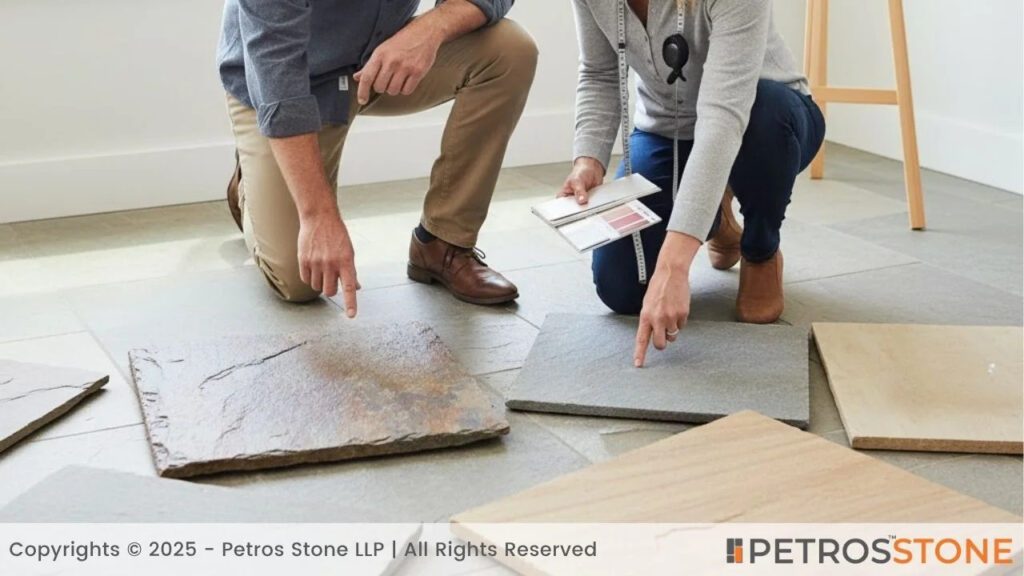
When one is choosing the appropriate alternative to flagstone, selecting a good-looking material is not enough. To prevent expensive mistakes in the future, experts suggest concentrating on the performance, safety, and long-term value.
1. Understand your climate first.
Installation is equally vital as the selection of the appropriate flagstone alternative. Even good materials might not work if they are properly installed. Adherence to established standards of installation is beneficial for enhancing durability, safety, and long-term performance.
2. Match the material to usage.
Durability is essential in high-traffic places such as walkways and patios. Granite, bluestone, and concrete paving can resist day-to-day wear as opposed to decomposed granite or slate, which is better used in decorative tracks.
3. Consider safety and comfort.
Ensure check slip resistance, particularly on the pool deck and shaded areas. Textured or naturally rough surfaces adhere better than smooth finishes.
4. Think beyond the upfront cost.
Less expensive materials can easily be fixed or substituted. The increased initial cost can be compensated for by reduced maintenance costs and increased life.
5. Consider installation and maintenance.
Irregular stones are difficult to maintain and install in comparison to uniform pavers. In case you want to keep it to a minimum maintenance, make sure to use materials with minimal sealing and cleaning.
These professional tips will make sure your flagstone alternative will perform well, look good, and also last many years.
Installation Insights and Best Practices
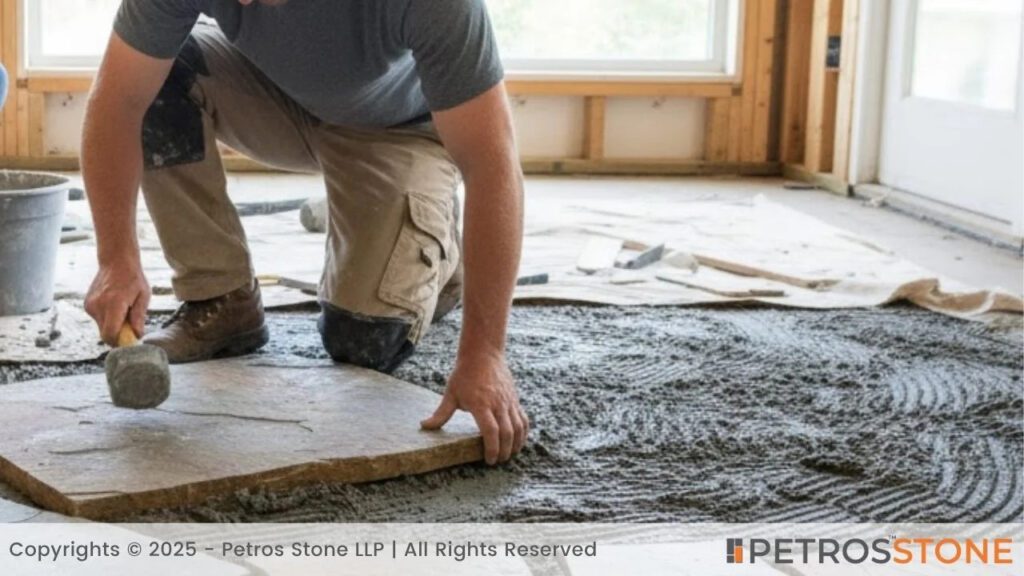
Installation is equally vital as the selection of the appropriate flagstone alternative. Even good materials might not work as long as they are properly installed. Adherence to established standards of installation is beneficial for enhancing durability, safety, and long-term performance.
1. Start with a hard base.
Dig the ground to the proper depth, and form a durable base of crushed stone or gravel. A stable base does not sink, shift, or crack with time.
2. Ensure proper drainage.
The slope should be maintained at all times towards buildings in order to avoid puddles of water from forming on the surface. Proper drainage lowers moisture losses and increases the longevity of the pavement.
3. Use edge restraints.
Pavers and stones are held in place by edge restraints or edges. This has been of particular concern for materials such as decomposed granite, concrete pavers, and small units of stone.
4. Maintain correct spacing.
Insert regular joints between stones or paving stones. This allows natural expansion and enhances visual balance. Depending on the type of material, use sand, gravel, or mortar.
5. Adhere to material-specific requirements.
Some materials require sealing, and those that require special adhesives or bedding layers. It is always advisable to go by the recommendations of the manufacturer or consult a professional installer.
Proper installation will make you have an appealing outdoor space.
Long-Term Maintenance and Performance
| Material | Maintenance Level | Expected Lifespan | Details |
| Granite | Low | 40–50 years | Maintenance Level: Low Expected Lifespan: 40–50 years Very strong and not liable to scratches, cracks, or stains. Should be cleaned with mild soap and water Every few years, sealing is good, and will prolong life and avoid minor stains |
| Bluestone | Medium | 30–40 years | Maintenance Level: Medium Expected Lifespan: 30–40 years Powerful, non-slippery, and aesthetically pleasing. Periodic sealing is a protection against water absorption and weathering. It is kept in good condition by regular sweeping and washing. |
| Limestone | Medium | 20–30 years | Maintenance Level: Medium Expected Lifespan: 20–30 years Softer rock, liable to chipping and staining. Needs sealing and light washing. Acidic cleaners should be avoided to prevent damage on surfaces. |
| Slate | Medium | 20–30 years | Maintenance Level: Medium Expected Lifespan: 20–30 years Delicate, stratified texture, but may be flaked or delaminated. Sealing prevents the intrusion of moisture. With frequent cleaning, mold or moss does not accumulate in damp climates. |
| Decomposed Granite | Medium | 10–15 years | Maintenance Level: Medium Expected Lifespan: 10–15 years Periodically requires topping up, leveling, and compacting. Should ensure a weed-free surface in order to preserve the looks and stability. Best around the low-traffic garden paths and informal spaces. |
| Cobblestone / Basalt Setts | Low | 50+ years | Maintenance Level: Low Expected Lifespan: 50+ years Very strong and can withstand traffic. Minimal maintenance and occasional pressure washing Long-lasting investment for driveways, courtyards, and pathways |
Key Takeaways
- Bluestone and granite are the best-performing flagstone substitutes.
- The cheapest one is decomposed granite.
- Limestone creates a soft and elegant outlook.
- Slate offers a sleek look; however, it requires sealing.
- Cobblestone guarantees unparalleled longevity and life cycle.
- Correct installation is no less important than the selection of the material.
- Non-slip surfaces enhance the safety of pools and foot locations.
- Take into account weather conditions and pedestrian traffic when choosing a material.
- The options with low maintenance save time and reduce long-term expenses.
- Outdoor testing samples will assist you in balancing the color and texture for your area.
Feel free to get in touch for a free consultation, quote, and get a detailed understanding from our experts here at Petros®. Visit https://petrosscape.com/ or call +91-8446360361 and WhatsApp

Hello!
I’m Dr Mridali, a content writer with a background in dentistry and a passion for turning complex topics into clear, engaging stories. From healthcare to architecture, I create blogs that inform, educate, and connect with readers. With every piece, I aim to blend accuracy with creativity to make information truly valuable.